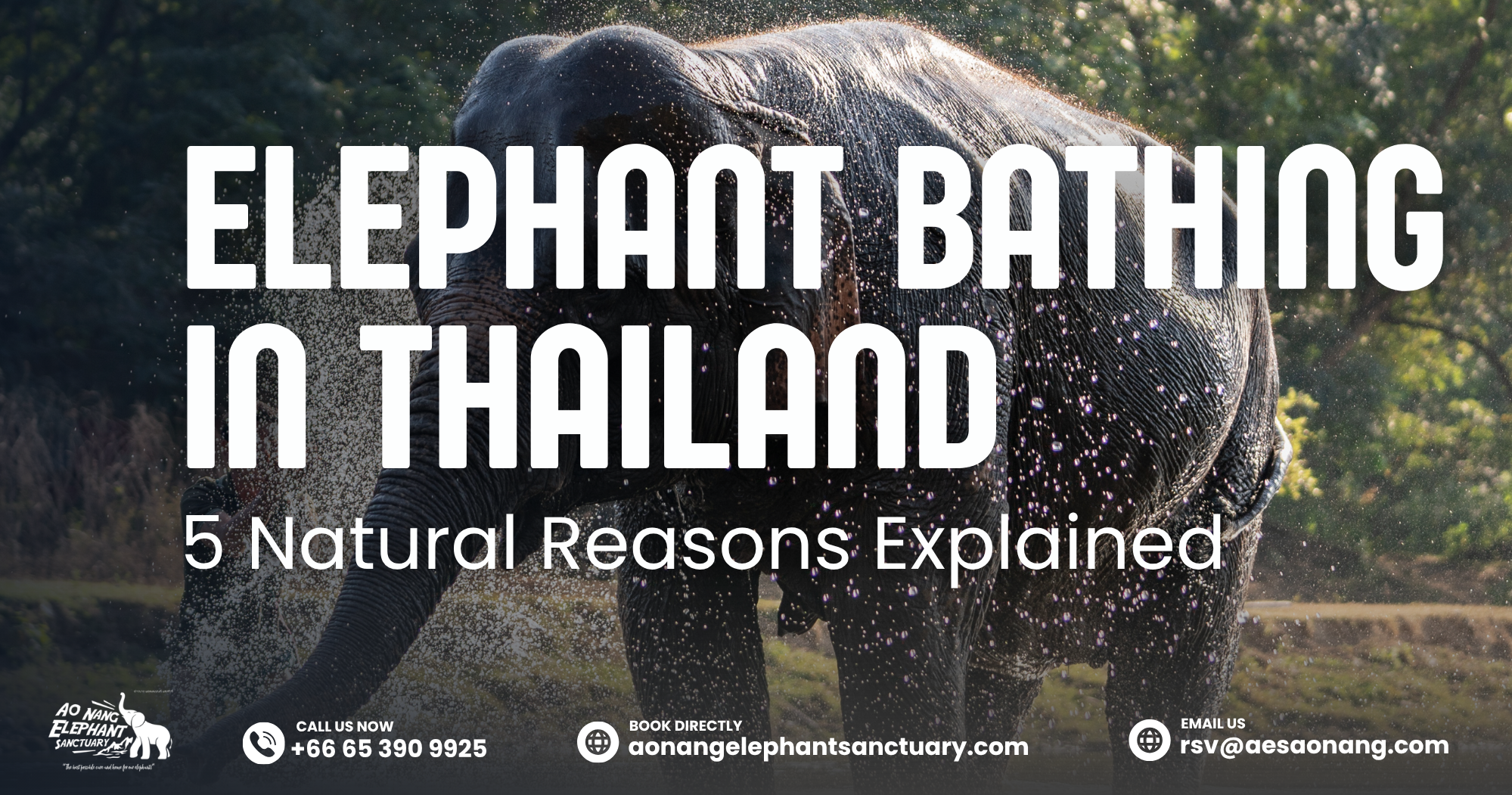
Elephant bathing in Thailand is one of the most sought-after wildlife experiences the country offers. Tourists fly thousands of miles for it. And honestly, it’s easy to understand why watching an elephant wade into a river and spray water over itself with pure, unscripted joy captivates people.
But behind that image is a question worth asking: is the bathing experience you’re booking actually good for the elephant?
The answer depends entirely on where you go and what that place values.
Is Elephant Bathing Ethical?
Elephant bathing itself isn’t the problem. Elephants bathe naturally and frequently in the wild. They seek water without any human prompting. So the activity, in isolation, is completely natural.
The ethics question is really about context. Who controls the interaction? How was the elephant trained to tolerate human presence? Does the elephant have any choice in the matter, or is it simply complying because it has learned that resistance leads to consequences?
At exploitative venues, bathing sessions run on a fixed schedule. Elephants get directed into water, positioned for photographs, and kept compliant through fear-based methods. The water looks refreshing. The reality behind the scenes often isn’t.
Ethical elephant bathing exists, and it looks genuinely different. The elephant moves freely. The human adapts. Nobody holds a bullhook.
Why Do Elephants Bathe? Understanding This Natural Habit
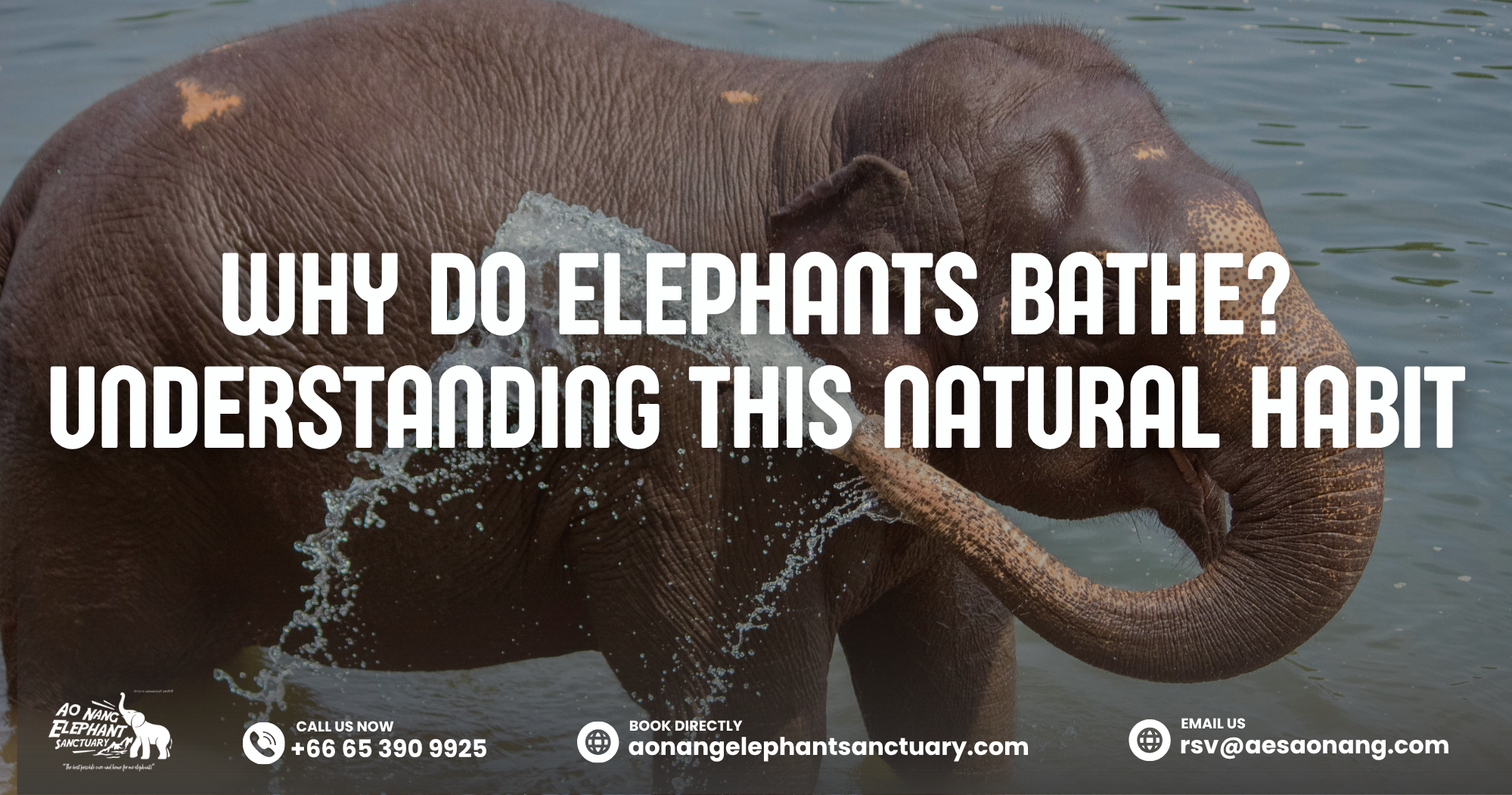
Elephants don’t give themselves a bath when their trainers tell them to do so. They do it because their body and instincts direct them to water.
Thermoregulation is the main reason. Elephants don’t perspire effectively through their skin. In the heat and humidity of Thailand, the body temperature rises fast. Water quickly cools them down, and the relief is instant and can be seen.
Mud is another way for elephants to utilize their bathing. When an elephant covers itself with mud and lets it dry, the mud becomes a protective layer on the elephant’s skin. The layer protects from UV light and also keeps the skin safe from insect bites. Thus, mud acts as both sunscreen and bug spray, and it is from the ground.
Moreover, the social aspect of elephant bathing is rarely recognized. Bathing is a communal activity for wild elephant families. Besides that, calves are rolling and splashing in the water. Also, adults are wading together. In fact, physical closeness during bathing helps build social relationships that are long-lasting and go way beyond the bathing spot.
Elephants in nature walk quite some miles to their favored bathing places. They have a memory of the places. They come back to the places. It is an indication that they not only do it functionally, but also that bathing is something they truly want to do.
How Elephant Bathing Benefits Their Physical And Mental Health
Going to the bathroom angle hardly gets any recognition. Bathing is not just elephants’ favorite activity; it is one of the ways that contribute to their physical and psychological health.
On the one hand, regularly having water and mud around helps prevent some severe skin diseases. An elephant’s skin is a paradox: it looks strong and tough, but it is pretty sensitive and would not hold up well to sunburn and cracking if it did not get enough moisturizing and protection. Elephants in the sanctuaries where they have daily exposure to natural waters look much better in terms of skin condition.
At the same time, water exposure tremendously enhances foot health. Adding water to natural terrain keeps the shape of complicated elephant feet in a healthier and more flexible state. This reduces the incidence of cracking and infection that tends to affect elephants kept on hard, dry surfaces.
On top of all that, bathing is a form of enrichment. It stirs up instinct, promotes activity, and, when the elephants bathe together, helps to strengthen the herd relationships that are extremely important for the elephants’ emotional well-being. An elephant that undergoes natural bathing regularly is generally calmer and fitter.
What Does Ethical Elephant Bathing Look Like?
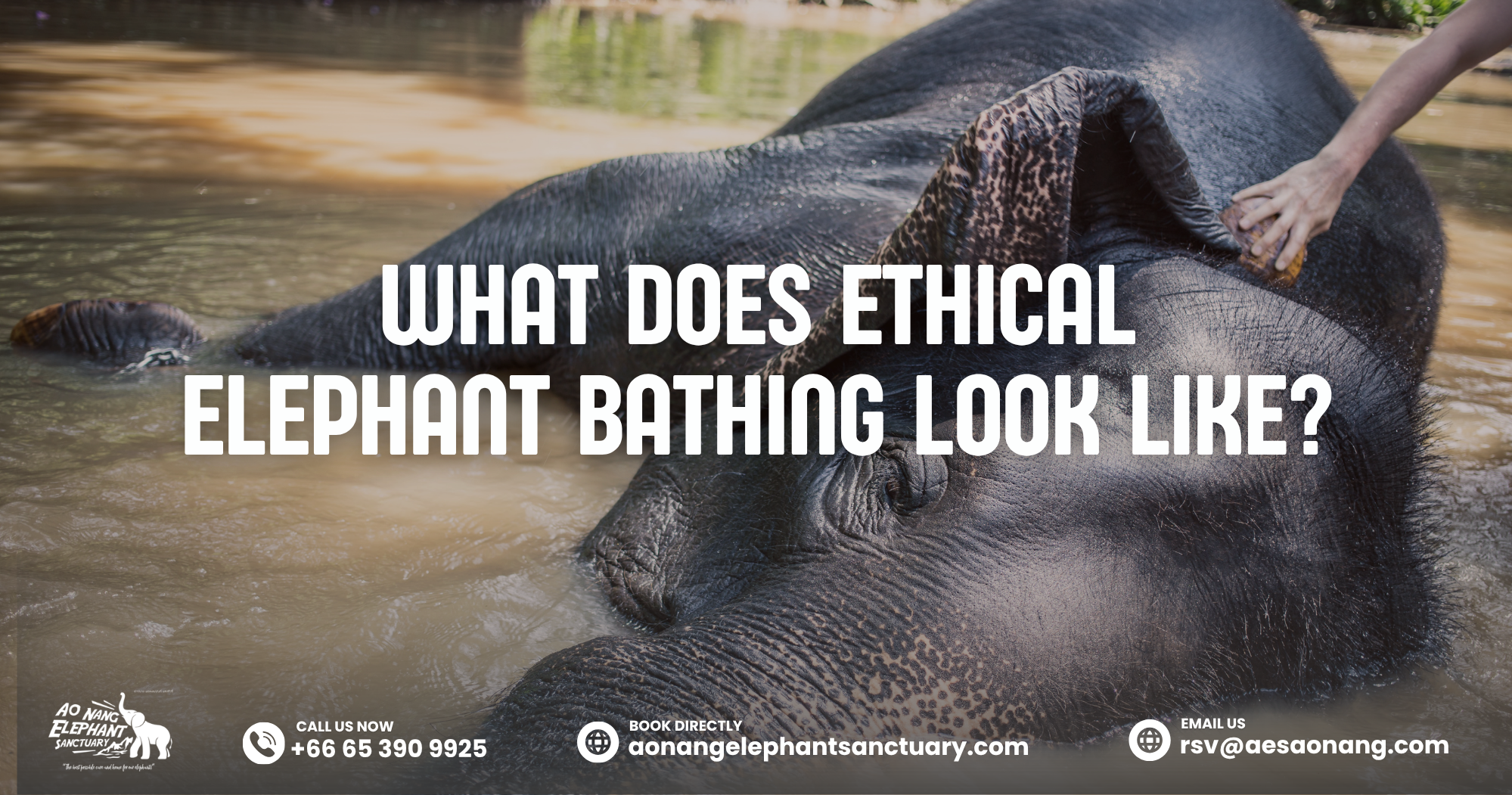
There are clear, observable differences between ethical and exploitative elephant bathing experiences. Knowing what to look for makes the choice much easier.
- Freedom of movement: Ethical elephant bathing happens in natural water sources where the elephant can move without restriction. No chains beforehand, no hooks during. The elephant enters the water because it chooses to, not because a handler directed it on schedule.
- Interaction led by the elephant: A genuine sanctuary won’t push an elephant into water for a timed show. If the elephant wanders toward the river and visitors happen to be nearby, that’s the experience. Some days it happens, some days it doesn’t — and that unpredictability is actually the mark of authenticity.
- Small group sizes: Large crowds stress elephants. Ethical venues deliberately limit visitor numbers. If you’re watching elephant bathing alongside fifty other tourists in matching ponchos, something is probably off.
- No riding involved: This is a consistent marker. Venues offering elephant rides alongside bathing experiences are not operating from a welfare‑first position. The two rarely coexist ethically.
- Observe the mahout: Watch how the handler interacts with the elephant. Trust looks very different from control. A mahout who speaks softly, moves calmly, and gives the elephant space is building a relationship based on respect. By contrast, shouting or forcing commands signals exploitation.
What Should Tourists Avoid When Experiencing Elephant Bathing?
Some practices are straightforward red flags. Others are subtler but worth knowing regardless.
- Avoid any venue that offers elephant riding. Riding and ethical elephant care are fundamentally incompatible. The spine of an elephant isn’t built to carry human weight repeatedly. Venues that offer rides are signaling their priorities clearly.
- Avoid bathing shows with fixed schedules. Genuine elephant behavior doesn’t run on a timetable. Scheduled shows where elephants perform bathing routines for tourist groups on the hour suggest the elephant is being managed, not respected.
- Avoid venues using bullhooks or chains. These tools exist to control through fear. Their presence tells you everything about the training philosophy behind the scenes.
- Avoid overcrowded experiences. Stress is invisible but real. Too many people, too much noise, and too little space all contribute to chronic stress in captive elephants — even when the observable interaction looks pleasant enough.
- Be skeptical of cheap prices. Genuine elephant care is expensive. Ethical sanctuaries invest heavily in land, nutrition, veterinary care, and trained staff. If an elephant bathing experience costs very little, those costs are being absorbed somewhere. Usually, the elephant does it.
How To Choose The Right Elephant Bathing Experience In Thailand
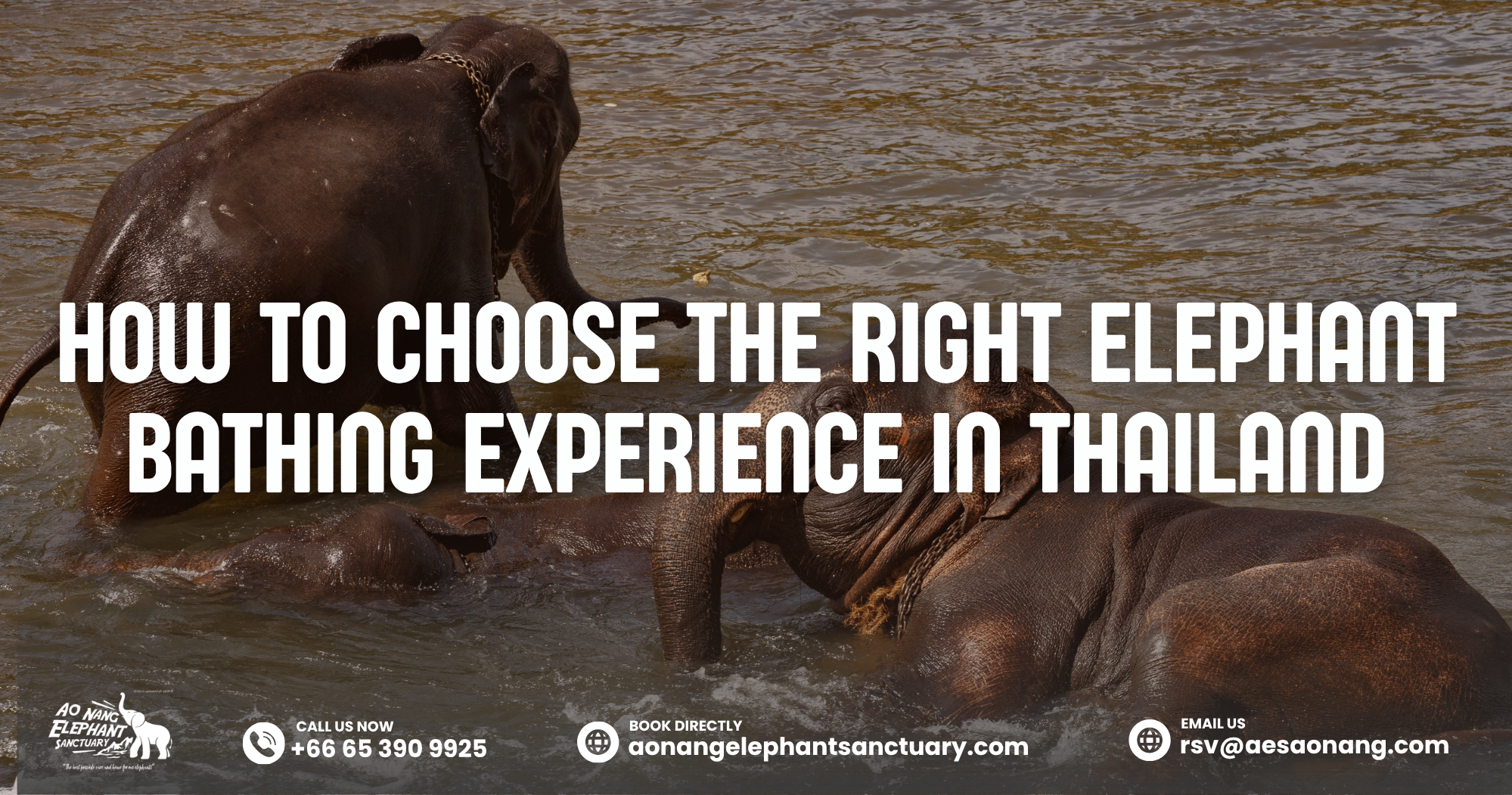
In the last few years, Thailand has meaningfully moved in the direction of ethical elephant tourism. Still, the situation is a bit confusing. Some places have genuinely changed their ways. Some people continue old practices while using ethical language to mislead others.
Before you book, do the research. Read reviews of people who raise the right issues. Be on the lookout for places that reveal pretty well how they got the elephants and the way they arrange the daily lives of animals. Be bold and inquire about training methods. The character of a reply is just as important as the reply itself.
Mostly, go by the sanctuaries’ policies that elephants are the ones to decide the places where bathing occurs naturally, not bathing on command. These are the places where the number of visitors is limited. And the places where the real elephant behavior gets attention and is not trying to make a photogenic moment.
Aonang Elephant Sanctuary builds every experience around genuine elephant welfare — including how elephant bathing fits into the natural rhythm of each animal’s day. Visit our site. Ask your questions and book an experience that you’ll feel good about long after you’ve left Thailand.
Reserve your spot now to get a chance to meet Asian elephants!
- Phone: +66 65 390 9925
- Email: [email protected]
- Book directly at aonangelephantsanctuary.com