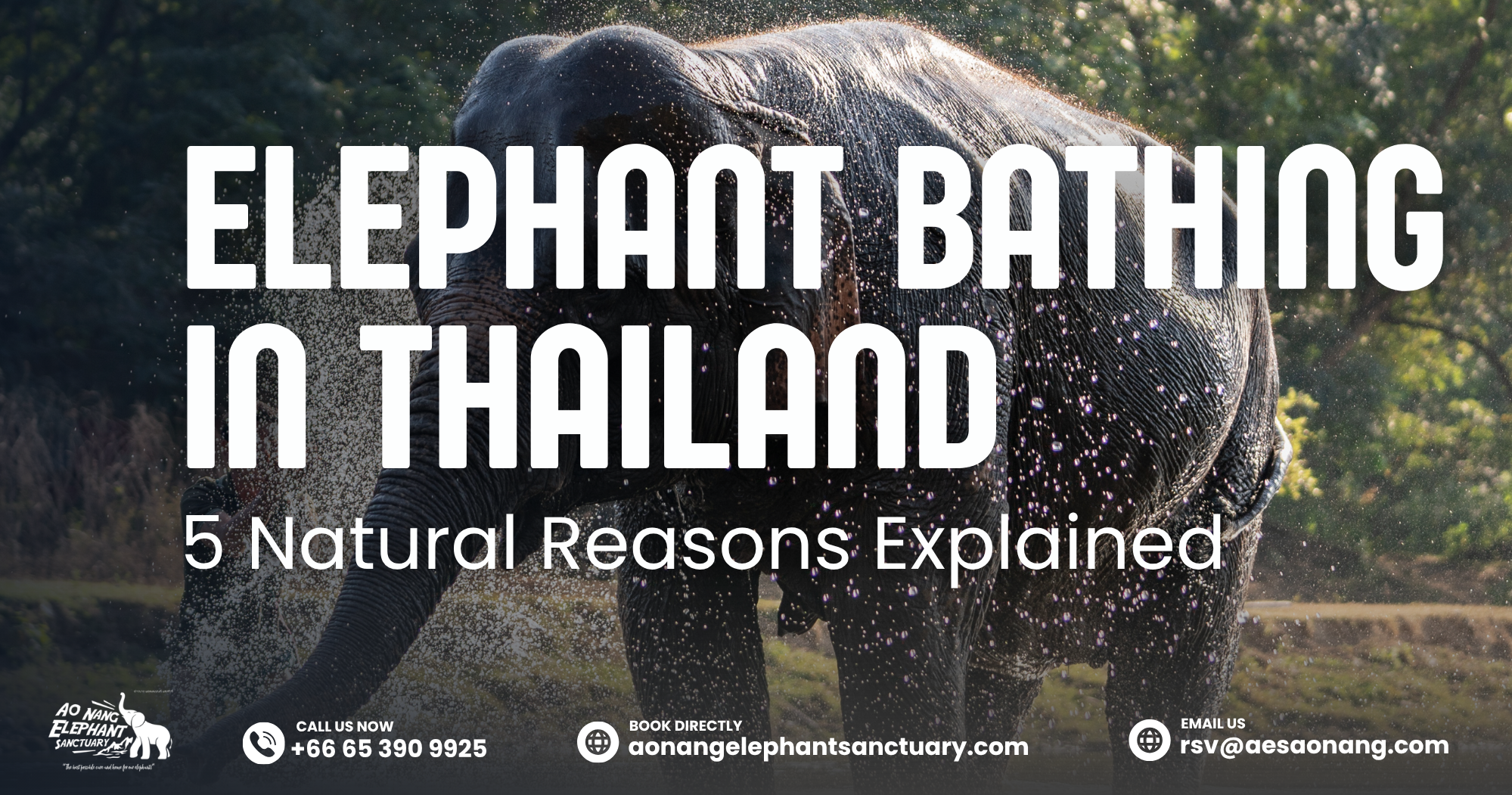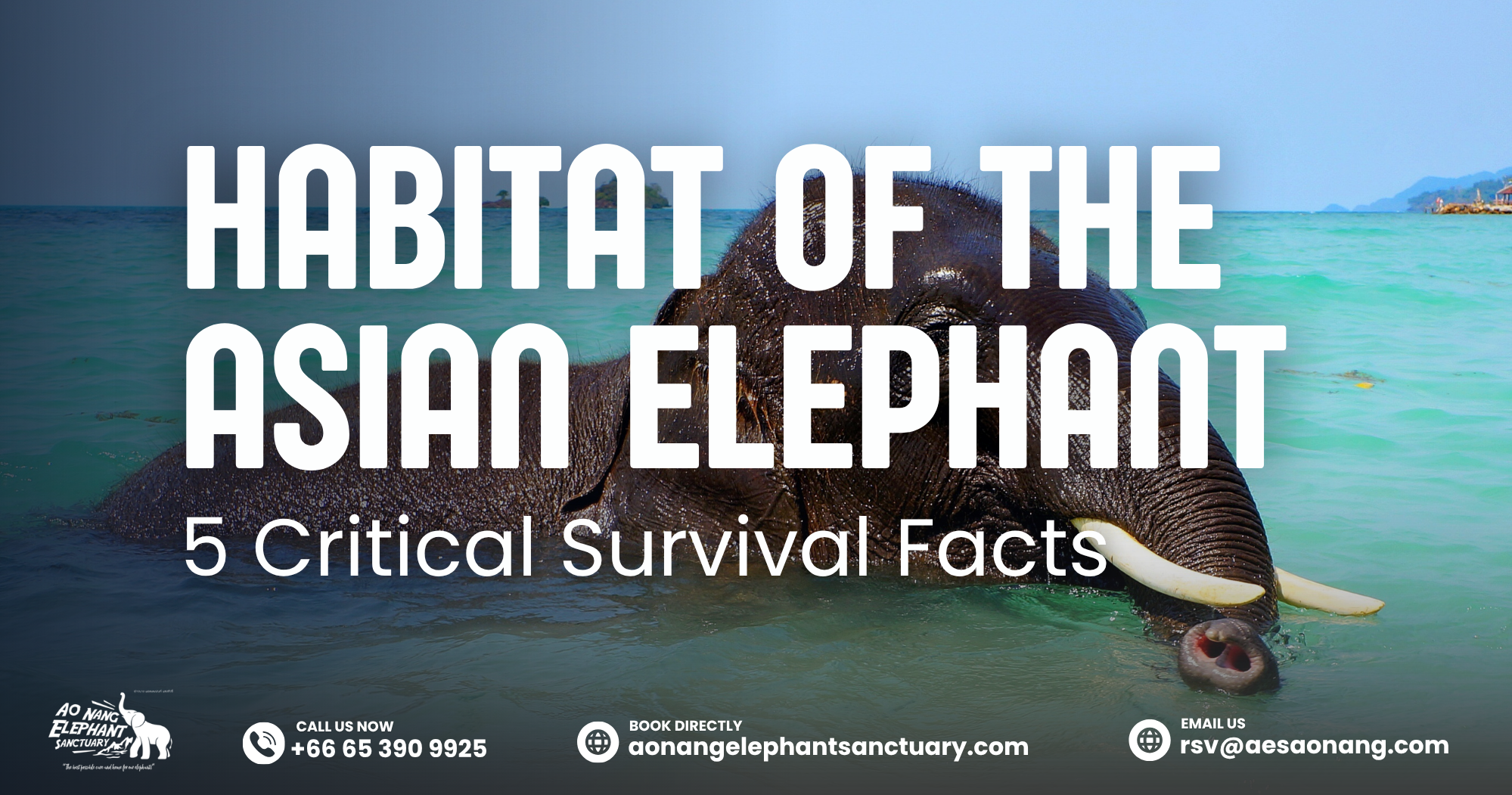
The habitat of the Asian elephant influences every aspect of their existence, from their lifestyle and movements to their thoughts and survival strategies. These adaptable creatures have managed to adapt to even the most diverse and dramatic environments, from dense rainforests to dry scrublands.
Unfortunately, human activities are rapidly destroying their natural habitats. This situation may cause the disappearance of these wonderful animals.
In fact, knowing Asian elephants’ habitat is not a mere intellectual exercise. This understanding is essential for grasping their way of life, and we must act quickly to protect it.
How Asian Elephants Communicate In Their Natural Habitat
To maintain contact within their local environment, Asian elephants depend to a great extent on infrasound. They emit very quiet rumbling noises that travel through the air and ground for several kilometers. These other elephants are capable of perceiving these vibrations via their feet and trunk skin.
On top of infrasound, they also communicate through audible calls. Rumbles serve as a way of conveying reassurance and warning, while trumpeting is an expression of strong emotion. Asian elephants are quite vocally gifted, as they also communicate through chirp and squeak sounds, which in fact are more frequent than in the African species.
Moreover, body language plays a major role in their communication. An elephant that is at ease will have a very relaxed posture with free and easy movements. If an elephant is alert, it will stiffen its body, spread its ears, and lift its head sharply.
Finally, touch is the language of emotions, linking everything together. Members of the same family may intertwine their trunks, lean on one another, and gently guide the calves. Besides, in a thick forest setting, the herd’s physical closeness fosters coordination and calmness.
Social Structure And Family Groups In The Asian Elephant Habitat
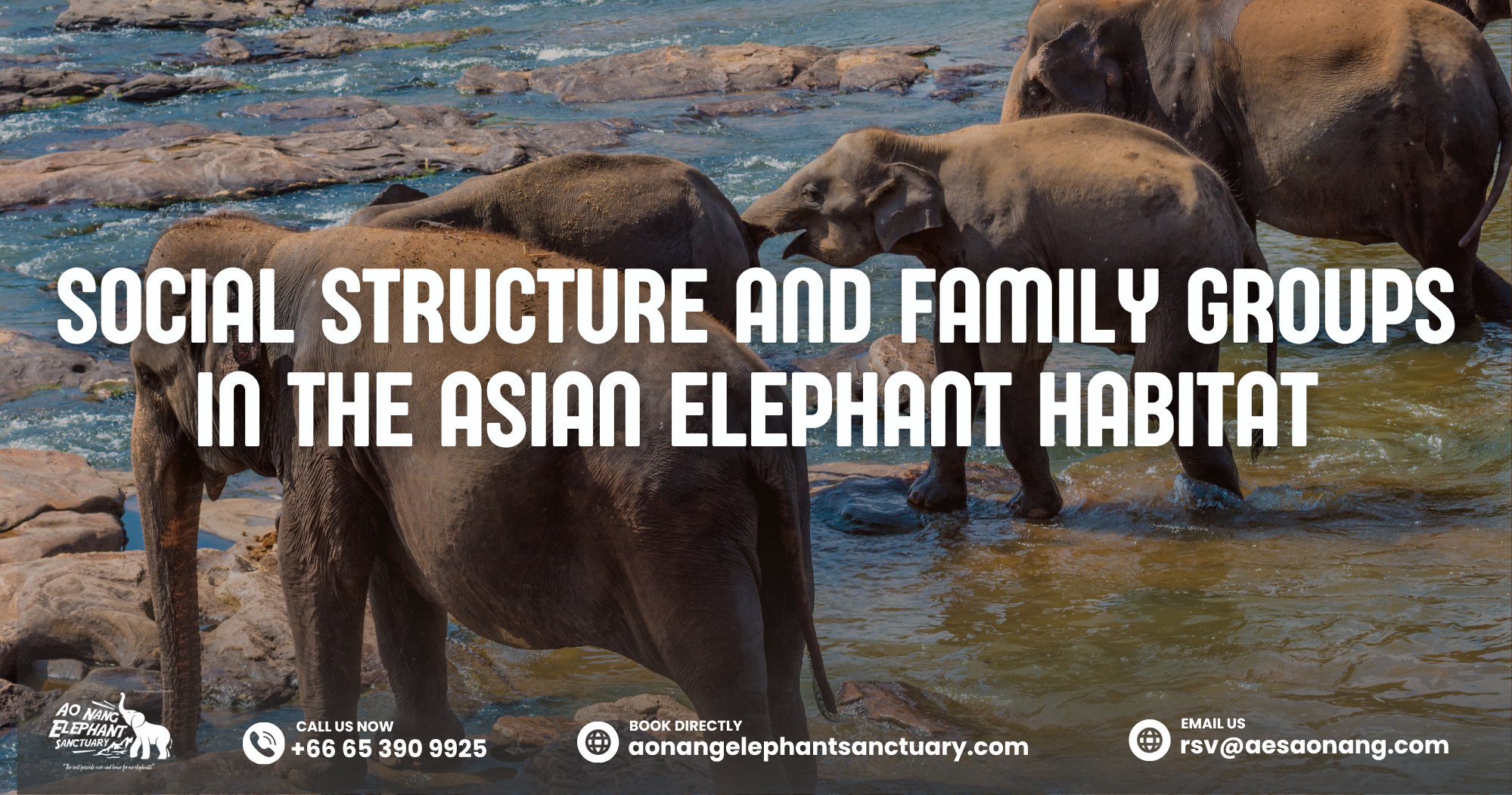
The way Asian elephants organize socially stems from their habitat and lifestyle. Female elephants form groups of about six to ten animals, led by a matriarch. Since she is the oldest, the female matriarch is the leader, and her knowledge is invaluable without question.
She keeps in her memory locations of water supply, secure pathways, and places where seasonal food is available. Groups with knowledgeable matriarchs are far better at navigating their environment. Nature has endowed them with that knowledge, which helps the entire family survive during difficult times.
Young elephants acquire all their knowledge simply by observing adult elephants. This technique has been used for generations to pass on information, such as where to find food, safe routes, and how to react to threats. That is done through seeing and hearing. One of the main purposes of a family group is to preserve that multigenerational knowledge.
Young males leave their birth herds between eight and fifteen years old. Some join bachelor groups; others roam semi-solitary ranges. During musth, bulls cover larger territories and become noticeably more assertive.
Feeding Habits
Asian elephants consume a mammoth amount of vegetation, ranging from 150 to 200 kilograms of plants per day. They dedicate up to 18 hours foraging, grazing, stripping bark, digging roots, and reaching into the canopy. Almost every move they make is food-directed.
Depending on the season and the type of habitat, their food preferences change. Grasses, bamboo, fruits, leaves, and bark are among the favorite foods of forest elephants. However, in dry scrubland-like areas, woody vegetation and drought-tolerant plants are also present.
Mineral eating accentuates their food-related behaviors in a very interesting way. Asian elephants intentionally consume soil that is rich in minerals for dietary supplementation. They habitually visit particular mineral lick sites, sometimes even journeying over sizable distances to reach them.
Water is indispensable in the habitat of Asian elephants as well. They are able to drink as much as 200 liters of water on a daily basis. The source of water is often identified through memories passed down from one generation to the next. In the course of dry season, they actually dig down at the river edges to reach the water.
Daily Routines Within The Asian Elephant’s Habitat
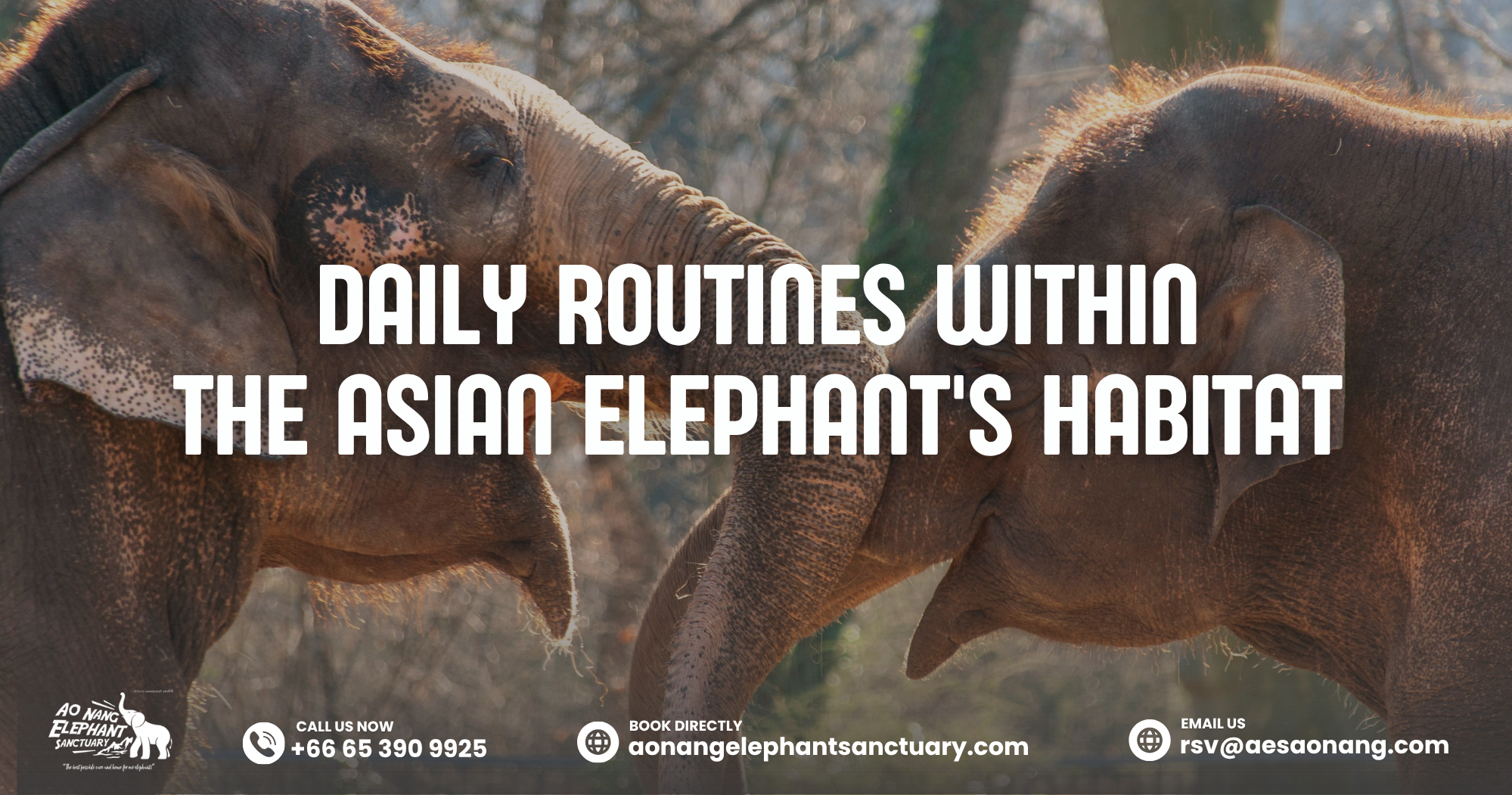
Asian elephants exhibit a fairly regular daily pattern, which temperature, terrain, and the availability of food determine. The first hours of the morning are when the whole habitat witnesses the peak of foraging activity. Elephants gradually move towards shade and water as temperatures get hotter.
They remain inactive in the hottest hours of the day and sometimes even sleep standing. They also fully lie down for the deepest sleep. Adult Asian elephants only have 3-4 hours of sleep per day, which ranks them among the least sleep-dependent mammals on Earth.
Elephants’ daily routine heavily revolves around mud bathing, too. They find the muddy pools, roll themselves thoroughly, and allow the coating to dry on their skin. Besides blocking UV rays, this mud layer also wards off insects, and as it evaporates, it cools the body.
Nightfall means more foraging, oftentimes extending into the wee hours of the morning. In regions where the human presence is more intense, some groups of elephants have changed their habits to be more active during the night, thereby showing a remarkable level of behavioral flexibility and adaptability.
Migration Patterns Across The Asian Elephant Habitat
Migration is not only a vital aspect of the Asian elephant’s lifestyle, but it is also highly endangered. The Asian elephants seasonally migrate between their feeding areas, water, and mineral sites. Matriarchs lead them on these migrations, basing their routes on the knowledge they have gained over many years.
In fact, these paths go through certain narrow forest corridors that connect bigger habitat areas. It is only when these corridors are destroyed by building roads or opening fields for farming, etc., that elephant herds lose their way and become unsafe. Also, lack of food, tension, and conflicts with humans rise sharply as indirect consequences.
Just having protected areas does not mean the issue is solved. The Asian elephant’s habitat must comprise connected landscapes instead of being dominated by isolated forest patches surrounded by agricultural land. One of the least funded aspects of elephant protection nowadays continues to be corridor conservation.
For anyone who is concerned, the magnitude of the loss of habitats is extremely shocking. At one time, Asian elephants were found all over Asia, but today they have been confined to less than 15% of their original habitat. This single fact highlights the severity of conservation measures quite clearly.
Why the Asian Elephant’s Habitat Matters To Every Visitor

Before even making a reservation for a visit to see elephants, one should first understand what is happening to their habitat, as this will completely change the way of seeing them. Then one will no longer see only a massive creature but rather an animal whose behavior the environment influences. In fact, when we consider a whole life, actions like seeking food, bathing in mud, or forming social groups suddenly become understandable.
Apart from simply sheltering the elephants, ethical sanctuaries are conscious of the fact that effort has to be made to create conditions that will encourage natural behavior. Space, social groups, natural terrain, and access to water are just a few examples of things that inherently must be present for an elephant to thrive.
In fact, those who have toured an authentic sanctuary often recall it as the most inspiring wildlife encounter in their entire life. The reason is not a coincidence either. It happens because the fact remains that elephants are comfortable, calm, free to move, and alive in a manner that is natural to them.
At Aonang Elephant Sanctuary, natural habitat and elephant behavior shape every aspect of care. Visit Aonang Elephant Sanctuary to experience elephant life in an environment built around their genuine needs — not performance. Book your visit and see what ethical elephant tourism actually feels like up close.
Reserve your spot now to get a chance to meet Asian elephants!
- Phone: +66 65 390 9925
- Email: [email protected]
- Book directly at aonangelephantsanctuary.com