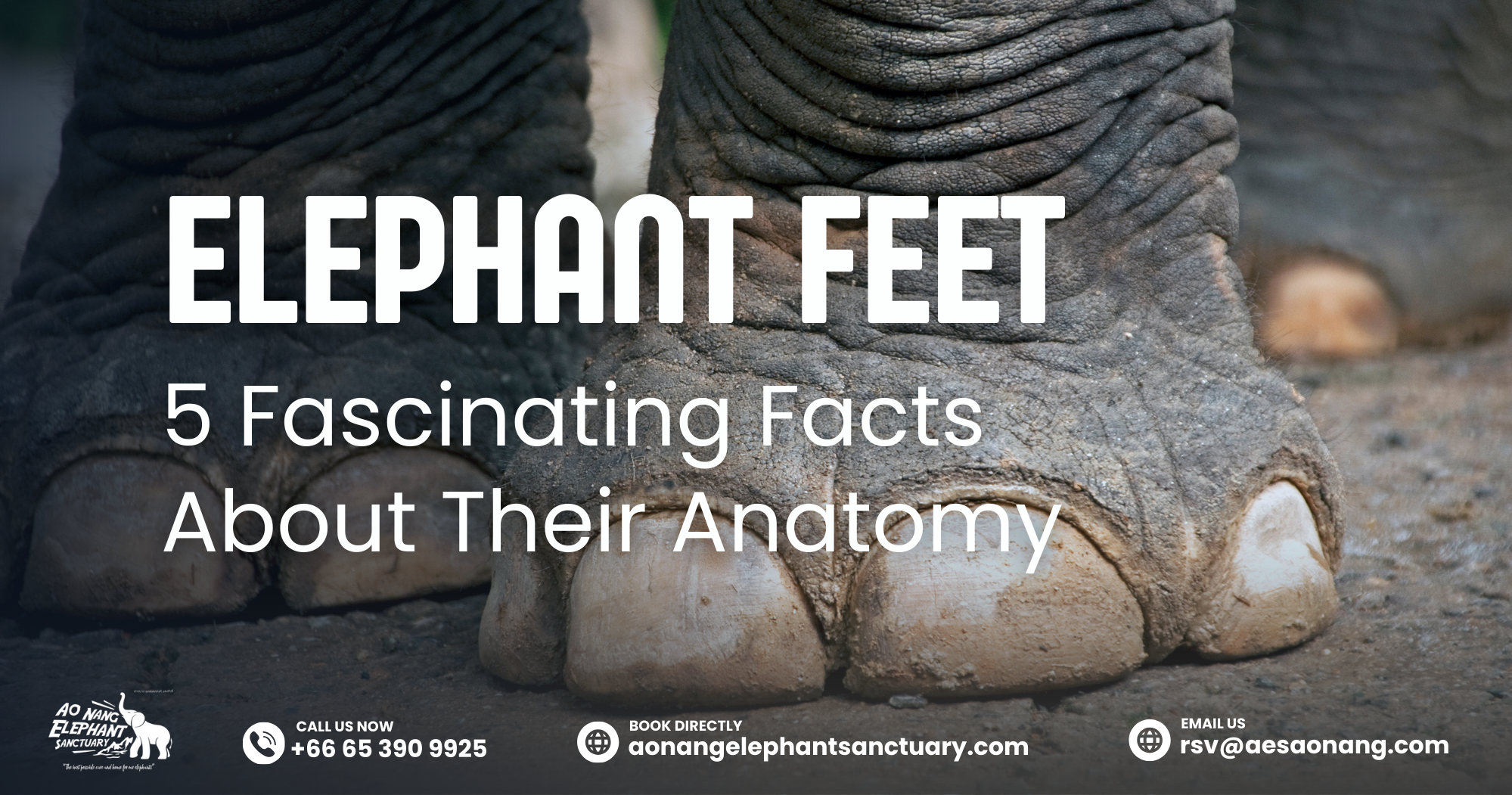
Elephants are most famous for their enormous size, high intelligence, and gentle nature, but it is their feet that really amaze. The feet of an elephant are extremely complicated organs that are built to sustain a few tons of weight and still make quiet and smooth movements.
Apart from being shock absorbers, the feet of elephants are also used for communication and temperature regulation and are necessary for every step these huge animals take. Knowing about the feet of an elephant can give us deeper insight into the biology of elephants and also make us understand that the right foot care, which is very important in the case of sanctuaries, is the most humane way of treating them.
What Are Elephant Feet Called?
Although there is no special scientific name for the feet of an elephant, its legs are sometimes called “pillar legs”. The reason for this name is the way the limbs function as strong columns supporting the heavy weight of the animal.
The front feet are usually more circular and bigger than the rear because they are the main carriers of the elephant’s body weight, especially the parts of the head and tusks.
The rear feet are more rounded and assist the pushing out of the body during locomotion. The variation in the shape of the front and rear feet allows the elephants to be able to spread their weight in a very efficient way and keep their balance even on difficult or soft terrain.
Anatomy Of Elephant Feet: A Complex Design

One fact that perhaps surprises a lot of people is that elephants have toes. Each foot has five toes, but the bones of the toes are inside the foot and are not like the ones in humans; they don’t stick out. There are no toes to be seen; instead, the broad toenails are what can be seen on the front of the feet. These not only work as a shield for the inner bone structure but also enable the elephant to have a firm grip and stability. Usually, the Asian elephant is found to have more toenails than the African elephant, but the work done is the same.
One point to be clarified is that elephants are not hoofed animals. Their nails are not forming a single continuous hoof; rather, the underside of each foot is covered by a thick, very soft-like cushion made of fatty tissue. This cushion can make it larger and smaller with every step, which is a reason why elephants do not produce any sound in contrast to their huge size.
At the same time, the cushion soaks up the shock, shields bones and joints, and makes the work lighter for muscles when the elephant is taking a long walk or standing for many hours. If the giant mammal was not equipped with a natural cushion, it would experience very bad joint damage.
The “false toes” in the elephant’s foot are predigits, which are cartilage-like structures. These “fingers” give the distribution of the massive elephant’s weight a more even manner and also the internal support along with the toe bones. The bones, the nails, the fatty deposit, and the predigits together make the most complex unit of the animal world that can hold such a heavy weight.
How Elephant Feet Support Massive Weight
The weight of an elephant can be from three to six tons, and still it walks with amazing smoothness and stability. The secret behind this is the construction of their feet. Elephants’ legs are directly under their body like columns that are supporting a heavy construction. This place of legs is very efficient, as it diminishes the working load of muscles and bones of the elephants and lets them perform the hard carrying task with only a little of their power.
Each foot having such a large surface area as an elephant’s makes that animal incapable of sinking in mud or soft ground very easily. Contrary to snowshoes, which are the inventions for spreading weight on snow, the elephants’ feet are almost the same, but they are natural and can be used not only on snow but also on any soft surface. Thanks to this characteristic, elephants can move with absolute freedom over the varieties of land, such as forests, grasslands, wetlands, and riverbeds with soft soil and sand.
What Makes Elephant Feet Unique?
Probably one of the most impressive aspects of the elephant’s feet are the features that are instrumental in enabling them to walk silently. In fact, the mighty beasts can move without making any particular sound.
What is more, the fat pad that is found under each foot acts as a shock absorber and also prevents the sound of thuds more than necessary; as a result, elephants are able to quietly reach water places or other animals. The silent walking is their survival weapon, and hence, it is the main factor that adds to the quiet but powerful presence elephants are often associated with.
The feet of elephants are also highly sensitive. For example, they can hear through the ground the faraway calls of their fellow mammoths or any other nature signals. In order to talk to each other over a long distance, elephants usually resort to low-frequency rumbles, which can then travel through the earth.
The sensory receptors in their feet that are closely connected to the brain receive these signals/vibrations. It is a way of finding out about other herds, feeling safe in the presence of other elephants, and never losing touch even if separated by a great distance.
Elephants are big walkers, and even more, they are, in fact, the most common long-distance pedestrians, a routine which in a day usually covers a few kilometers and is done in search of water and food. Their feet have been designed in such a way as to possess the powers of endurance.
Their movement is fortified by this mitochondrion of the limb, which is made up of the strong bones supported with flexible cartilage and shock absorbers in the form of fat pads so that the elephant, among other things, can walk continuously, then hold on to balance, protect itself, and support weight from the rest of the body without getting injured and gasping for breath. The parts cannot perform such tasks separately but only with one another.
Foot Problems And How Sanctuaries Protect Elephant Feet

The truth is, after all, that the elephant’s feet may be very tough, but the cause of the problem would be the hard surface and limited space that are the common factors in the conditions where elephants are kept.
Consequently, in cases of captive elephants, the development of different problems such as cracked toenails, pad infections, abscesses, and swollen joints may be seen as initiated by the location of the animals. Also, these issues stem from the situations where the huge beasts excessively stand on concrete and walk on the unreal terrain.
Elephants in ethical sanctuaries have their foot health as a top priority. The keepers of the sanctuaries make sure to provide spaces that are friendly to the feet of the giants and allow their footpads to flex naturally with mud, soil, grass, or sand as the ground where these corks naturally grow.
Also, they are allowed to walk daily; thus, the blood circulation is stimulated, and pressure on the joints is lowered. The care team routinely inspects, and by that time, they also clean the toenails, trim the rotted parts, and make certain that there are no first signs of the infection. A regular commitment to the maintenance of elephant feet holds back the onset of excruciating ailments and guarantees that elephants will be able to move freely and comfortably in their lifetime.
Visitor Questions: Common Curiosities About Elephant Feet
Questions about the foot of the elephant are mostly about whether they have hooves, whether they have fingers, and whether it is safe to touch.
Are Elephants Hoofed Animals?
The answer to this is “no.” The element that may cause the misconception of a hoof is actually a toenail.
Do They Have Toes?
Yes, however, the bones are encased inside the foot. Generally, people are discouraged from touching the feet of elephants in order to prevent any possible harm, which might result as the feet are very sensitive and, most importantly, the main medium of communication and health. To ensure the comfort of the elephants and their natural behavior, sanctuaries have restricted such kinds of interactions; thus, the interactions are only up to a safe walking or feeding experience.
Some visitors find it curious that elephants at times raise their feet towards the personnel of the care unit. Such conduct is noncompulsory and forms a part of the regular foot check routine. Caretakers are always gentle and never resort to using force.
Step Into Their World

Elephant feet are incredible constructions that are a great example of nature’s biological innovation. They not only hold the huge weight but also absorb the shock, allow quiet movement, and even permit the elephants to send messages through vibrations. The whole elephant’s foot is the main contributing factor to the continuance of its life and daily living.
If you want to see how elephants use their feet naturally and learn more about their behavior and care, consider visiting Aonang Elephant Sanctuary in Krabi. The sanctuary provides natural terrain, gentle routines, and ethical interactions that prioritize the comfort and health of every elephant. Observing these giants walk, explore, and enjoy their environment offers a deeper appreciation for the incredible design of their feet.
A visit to Aonang Elephant Sanctuary not only enriches your understanding of elephants but also supports compassionate, responsible care for these remarkable animals.
Reserve your spot now to get a chance to meet Asian elephants!
- Phone: +66 65 390 9925
- Email: [email protected]
- Book directly at aonangelephantsanctuary.com