Elephant musth is one of the most powerful and yet the least understood phases in a male elephant’s life. This is a naturally occurring biological state that changes the behavior, hormones, and social relations in elephants living in the wild as well as those in enclosed environments.
Being acquainted with musth will not only help you understand how to take care of elephants but will also broaden conservation awareness and guide you in the ethical management of sanctuaries.
Ao Nang Elephant Sanctuary’s approach towards musth is grounded in scientific knowledge, full of patience, and prioritizes elephant welfare. Musth is not seen in terms of fear or exploitation. Rather, it is an opportunity to observe elephant biology and behavior in a very natural and responsible way.
What Is Elephant Musth?
Musth is an elephant condition that occurs periodically in mature male elephants. During this time, their testosterone levels increase massively—up to even sixty times the normal level sometimes. Such a hormonal change leads to behavioral alterations, increased self-confidence, and some physical changes.
Musth should not merely be equated with aggression. Rather, it shows that sexually, the elephant is in prime condition, which also leads to increased social dominance. In natural surroundings, musth serves as a means of figuring out the mating hierarchy, thus lessening the number of physical fights.
Both African and Asian elephants can have musth episodes. The extent and time of the episode vary depending on the elephant’s age, state of health, and environmental factors.
Physical Signs Of Musth In Elephants
Musth leads to several changes that can be seen physically. Temporal gland secretion is one of the most easily noticeable of these changes. These glands, situated between the ear and the eye, discharge a viscous, dark fluid when an elephant is in musth.
Another typical sign includes the constant leaking of urine. This behavior conveys to other elephants the message of dominance over long distances by spreading their scent.
Elephants engaged in musth not only raise their heads more often but also show their confidence through their walk. Just by their disposition, they can considerably affect the way other elephants react to them.
At Ao Nang Elephant Sanctuary, which is an ethical sanctuary, the caretakers closely observe such physical changes so that they can take care of the elephant’s needs accordingly.
Behavioral Changes During Musth
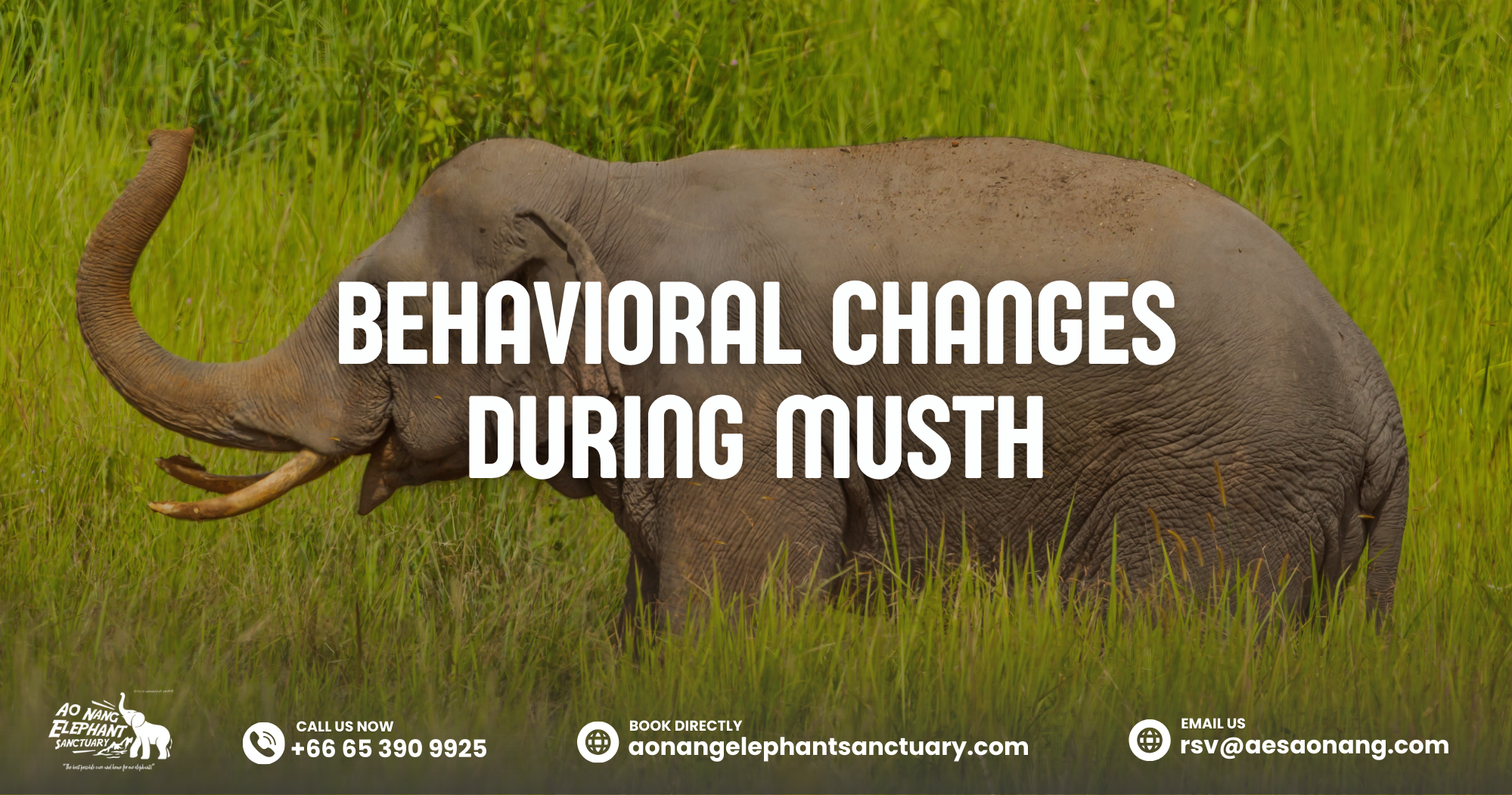
When elephants go through musth, their behavior changes dramatically. Some elephants even become aggressive. The most dominant males, in particular, can display a more boastful and louder demeanor. There are cases when male elephants get so self-confident that they flare all over. In fact, the ability to assert oneself during musth gives the males an advantage in courting the females by allowing them to expend less energy through fighting.
On the other hand, elephants do not go into musth to rage uncontrollably. Elephants that are well cared for are still able to be predictable if they have enough room, routine, and a low level of stimulation.
Male elephants in musth, in their natural habitat, mostly keep to themselves and travel great distances to meet their needs. This solitary time not only decreases the likelihood of conflicts but also somehow stimulates genetic diversity.
Sanctuaries are mainly focused on fulfilling these natural needs of animals, and therefore, very often give the animals spaces of silence away from the world.
How Often Do Elephants Experience Musth?
The occurrence of elephants musth mainly varies with the age and maturity level of the elephant. The younger ones might have their first musth moments for only a few days and somewhat irregularly, while the older ones, who are dominant, may stay in musth for a few months.
At the age of twenty-five, an elephant is considered to be in the prime of its musth cycle. This is the time when his body is at the right level of his physical development for him to successfully fight for his rights.
Aside from that, if the environmental conditions are stable, then musth cycles will be a lot more normal. If elephants live in a stress-free, ethical place, their musth cycles are bound to be more regulated.
At Ao Nang Elephant Sanctuary, the elephants live in an environment of tranquility, which makes it easier for them to get through their musth cycles without the added burden of panic.
Elephant Musth In The Wild Vs Sanctuaries
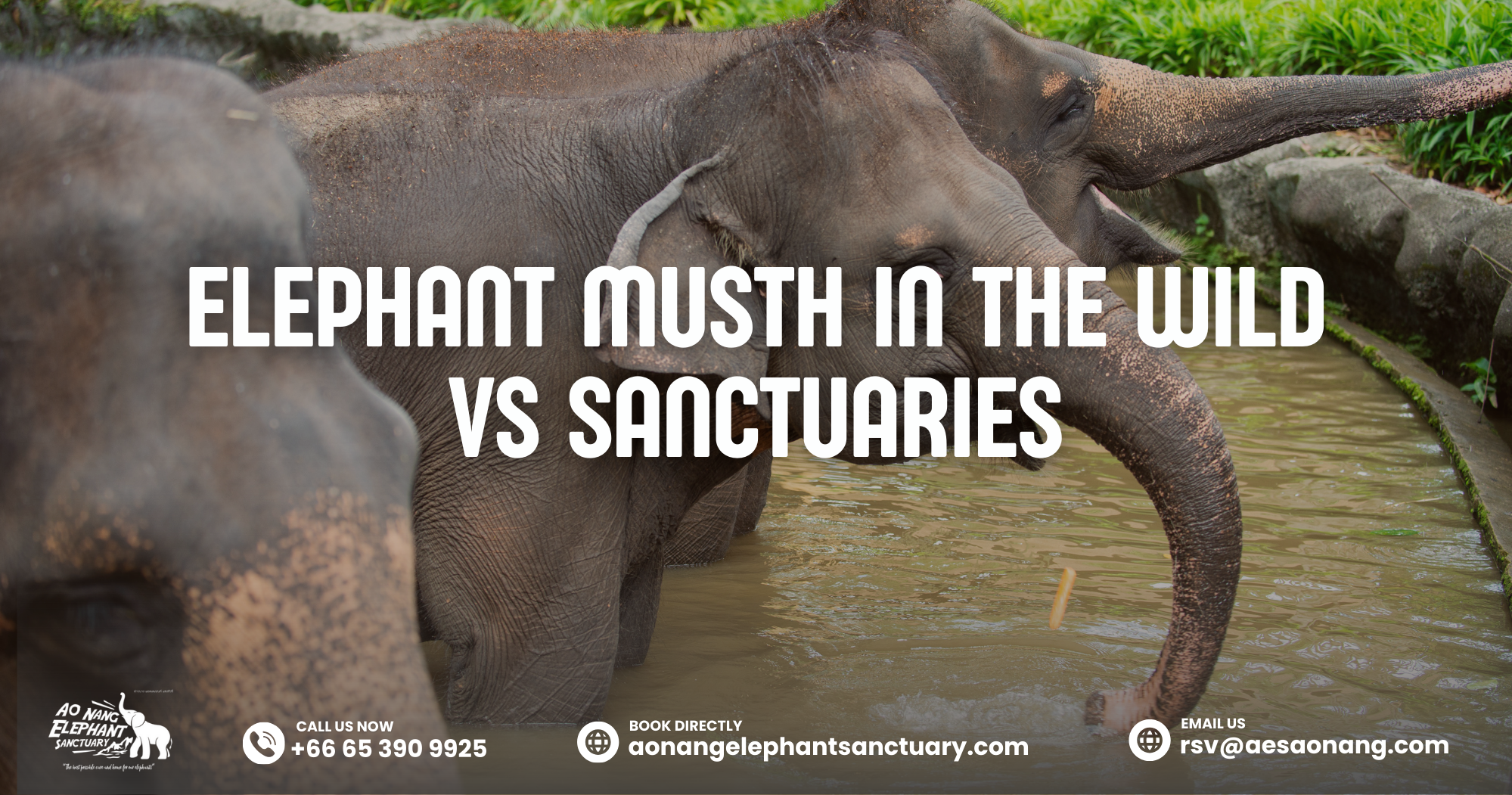
One of the main things that makes musth necessary in the environment of a wild elephant is that it makes it easier to impose a structure on the breeding systems. It also keeps the male competition from becoming too violent. Besides, the females’ preference for musth males might be based on their natural hormone production during musth.
Nevertheless, natural cycles of elephants are still being disturbed due to loss of habitat and human interference. The restricted area and proximity to each other in which the animals are forced to live can make musth a very stressful experience for the animals.
Well-run sanctuaries aim at low human contact and peaceful conditions. Elephants go through the musth stage in more comfort with room only to move around, little human presence, and special care.
Ao Nang Elephant Sanctuary gives more importance to observing rather than interacting during the musth period, thus making elephants’ safety their priority even if it goes against the visitors’ expectations.
How Ethical Sanctuaries Manage Musth
Good caretakers never hide or punish the musth behavior of elephants. They change the schedule of the elephants to make them more comfortable and keep them safe.
Elephants in musth can be given a different walking schedule, can stay in a quiet place, and mighty bulls may be separated at a greater distance. A doctor keeps checking the animal’s hydration, food intake, and overall health.
Hanumans using a reward system to train elephants can spot the signs of musth very early. This skill helps them avoid stressful situations or the need for fight-or-flight responses. Ao Nang Elephant Sanctuary strictly follows no-riding, no-forcing rules, especially during hormonally sensitive times such as musth.
Myths And Misunderstandings About Elephant Musth
One of the most common misconceptions about musth is that elephants become so wildly violent that they can hardly be controlled. The incorrect idea was created mostly due to old-fashioned captive methods and tourism experiences where animals were forced to do tricks.
Actually, elephants going through musth will act normally and even predictably if they are treated with respect. It is only when people do not take into consideration the animal’s natural limits that problems will develop.
Another myth is that musth elephants are in pain. They might experience some physical problems, like any other animal during a natural and vital biological cycle, but they don’t suffer. It is education that becomes a powerful tool in changing the once negative image of the elephant. A reputable sanctuary is always a place of education and not entertainment.
Why Understanding Musth Matters For Conservation
Understanding the elephant musth gives a green light to the development of further good conservation strategies. It can therefore be concluded that the mere availability of space, freedom, and social clusters is critical.
The reverse result of mismanaged musth in the past was the mistreatment of elephants. Nowadays, there is a minimal chance of that happening if science-based methods of care are used in sanctuaries.
At the same time, understanding can also make a visitor choose a noble and lawful sanctuary. Thus, by witnessing the natural behaviors of these animals, people develop an impactful love for the cause of wildlife conservation.
Ao Nang Elephant Sanctuary’s visit program is fully incorporated with the element of education; therefore, visitors do not get entertained at the expense of the animal but get to learn something new instead.
Respecting Nature’s Most Powerful Phase
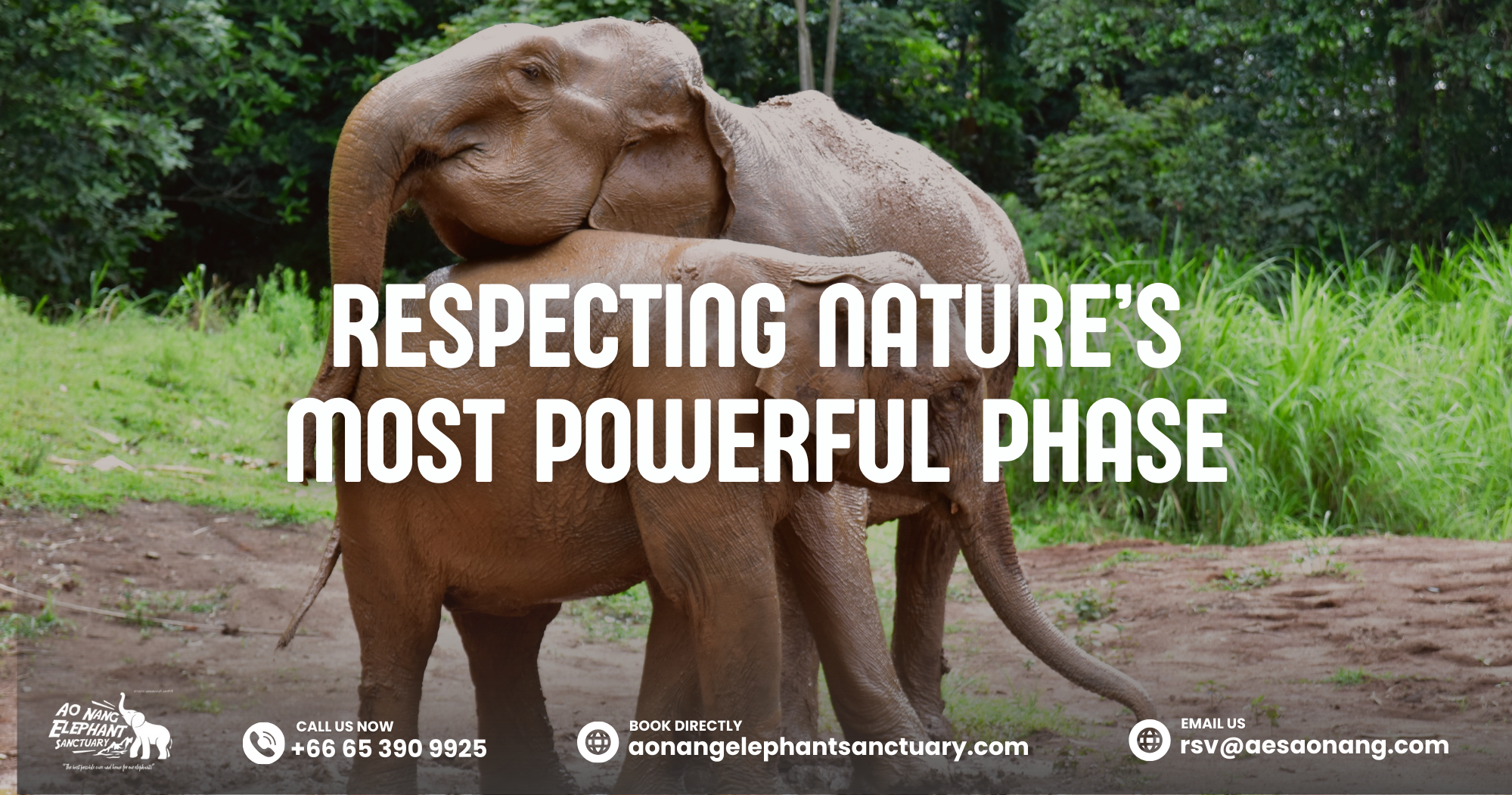
Elephant musth illustrates power, the full maturity of the animal, and being biologically in balance, not a state of danger or chaos. If one gives the necessary respect, it proceeds peacefully and naturally.
Ao Nang Elephant Sanctuary, an ethical sanctuary, is an excellent example of how science, patience, and compassion can bring about improved outcomes for elephants. By undertaking responsible activities, tourists become elephant welfare and conservation advocates.
If you desire an ethical and educational elephant experience based on respect, why not visit Ao Nang Elephant Sanctuary? Each well-informed decision is a step towards securing these noble creatures for the time to come.