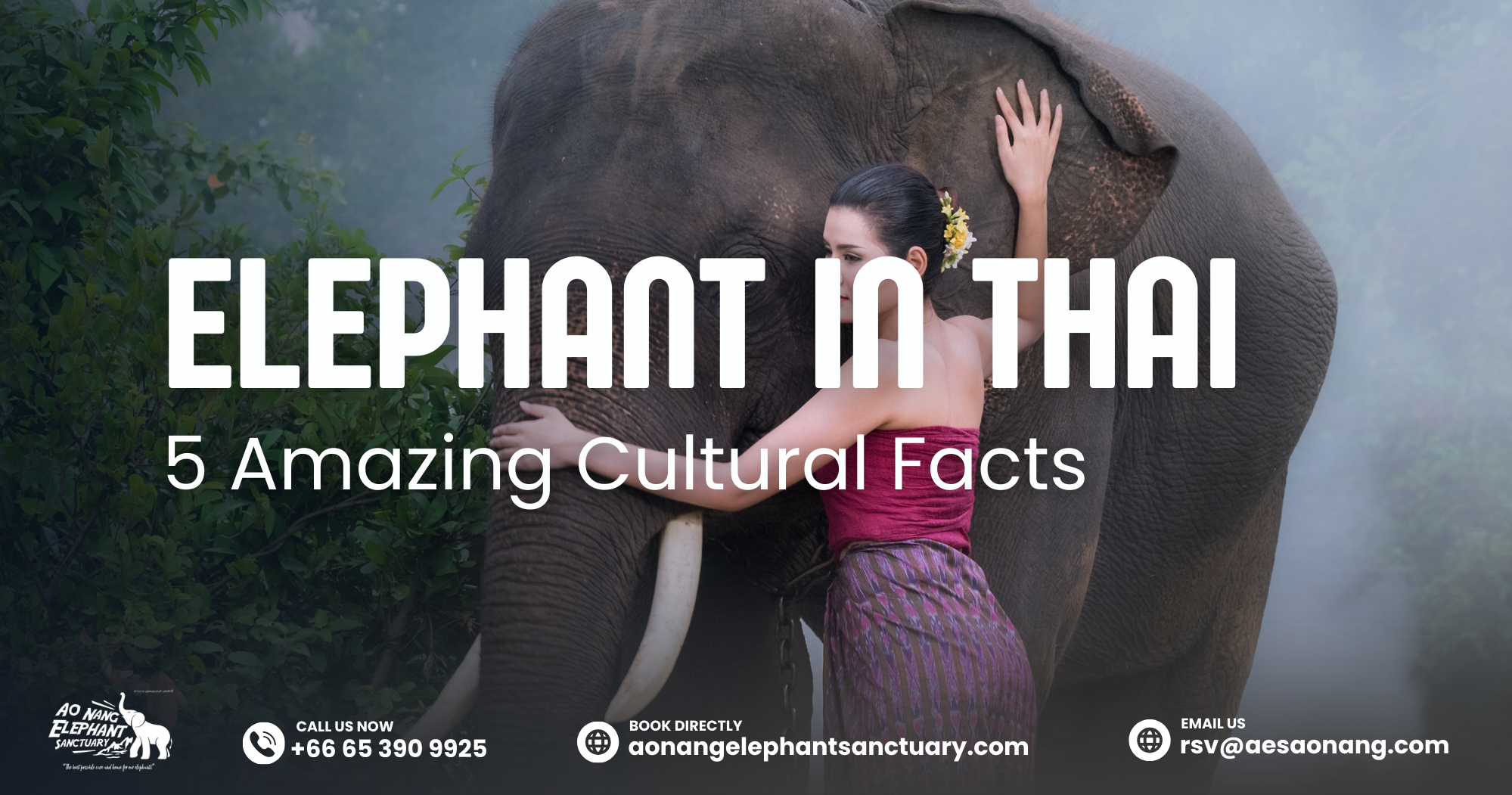
Elephants rank among the strongest cultural icons of Thailand. The roles they have fulfilled in wars, religious ceremonies, royal traditions, and even the daily lives of the Thai people date back millions of years. Knowing what “elephant in Thai” means is not just learning a new word but also getting to know a close cultural bond between the Thai and these beautiful animals.
Thailand is commonly related to elephants through travel, art, and traditional stories—but the importance of elephants is not limited only to sightseeing. They are characters symbolizing power, wisdom, prosperity, and patriotism. Becoming familiar with the use of elephant in Thai language and culture tells the story of their integration into the spirit of the nation.
We talk about the meaning of “elephant” in Thai, how elephants are used in symbols, and the cultural uses of these animals.
What Is “Elephant” In Thai?
In Thai, elephant is called “ช้าง” and is pronounced “chang.”
It sounds more like “chaang” with an extended vowel sound. In the Thai system of writing, it is written as ช้าง. Though the word is very short, it is present in many Thai sayings, place names, and idioms because elephants have been deeply integrated into Thai culture for centuries.
For instance, names of national parks, streets, companies, and even famous Thai brands have elephants in them. In informal talk, Thai might also use the word “chang” if referring to nature, history, or cultural symbols.
Besides, the word is a part of compound phrases naming particular kinds of elephants or conveying cultural meanings. Like “chang pa” denotes wild elephants, and “chang baan” means domestic elephants. The significance of elephants is so great that the Thai language has many proverbs and idioms associated with the word.
The Historical Importance Of Elephants In Thailand
Looking at the historical role of the elephant will give us a better understanding of the meaning of the elephant in Thai.
Elephants have been a vital part of Thai civilization for the past few centuries. Humans could hardly do without them even as a means of conveyance, in the field of agriculture, and most notably in the logging industry, where their great physical strength enabled them to move heavy logs through forests.
Besides their involvement in the wars when even the kings were mounted on elephants, war elephants were also trained and became an emblem of the army. For this reason, elephants came to be linked with the king and the concept of the leader figure.
The significance that elephants held underwent a drastic transformation when Thailand stopped commercial logging in 1989. Many forest elephants that had been working in forests were shifted to tourism-related settings or conservation programs. Nowadays, the emphasis is more on conservation, rehabilitation, and responsible tourism. However, the fierceness of elephants as a national symbol has not diminished.
Elephants In Thai Symbolism
Elephants stand for multiple key values in Thai culture. Such symbolic meanings of elephants may even be found in the country’s art, architecture, religion, and sense of national identity.
Strength And Power
Strength is, without doubt, one of the most well-known symbols of elephants in Thailand. Using their huge body size and great physical power, they effortlessly represent the ideas of being able to withstand difficulties and never giving up.
Thai artists in the old days often gave elephants the responsibility of carrying temples, royal platforms, or sacred objects, thereby highlighting their relation with strength and the idea of being able to provide support.
Wisdom And Intelligence
Elephants are one of the main reasons that the Thais love their animals so much. They respect elephants not only for their behavior but also for their intelligence, too. They even see them as the wisest and smartest creatures, just according to their memory and awareness.
They are still honored by their amazing memory and thus their incredible wisdom that they have kept for so many years. This is why stories and folklore sometimes depict elephants as a symbol of the mind.
Good Fortune And Prosperity
Elephants are believed to be a sign of good luck and prosperity in many Asian traditions. In Thailand, you can find elephant figures everywhere, from temples and art to daily household ornaments, all designed to attract positive vibes.
The belief is that elephants bring dwellers steady, protective, and plentiful lives, so figurines are kept as lucky charms.
The Sacred White Elephant
Elephants play the cultural role of a country-wide symbol of Thailand, a symbol of growth, wealth, and glory, a mark of good health, a visible sign of divine power, and a prized treasure. The finding of a white elephant was a spectacular event and a cause of celebration in the old days, as their rarity has always brought about an exalted reverence, and people have blessed the white elephant with the highest symbolic glory.
In fact, the king was the sole person to see, own, and control the management of a white elephant in the past since it was bestowed the most honor and affection of all the other animals by the powers among men and nature. And so, the white elephant was on the old flag of Thailand up until the new flag was created in 1917. These days, white elephants are used as symbols of the king and the country’s heritage.
Elephants In Thai Religion And Mythology
Elephants have been deeply intertwined with religious faiths as well as the mythologies of Thailand. Among other things, Erawan is a three-headed elephant known from Hindu mythology, which is very famous. It is said that Erawan is the vehicle of the god Indra in addition to being a symbol of divine power and protection. You can find sculptures and artistic portrayals of Erawan at temples, museums, and various religious places in Thailand.
In the Buddhist norms, elephants are also featured in the story of the Buddha’s birth. Queen Maya is said to have dreamt of a white elephant prior to the birth of Prince Siddhartha, who eventually became Buddha. This dream has been interpreted as a symbol of purity and spiritual greatness. Due to these faith-related reasons, temple paintings, mosaics, and sculptures frequently feature elephants.
Elephants And Thai Cultural Traditions
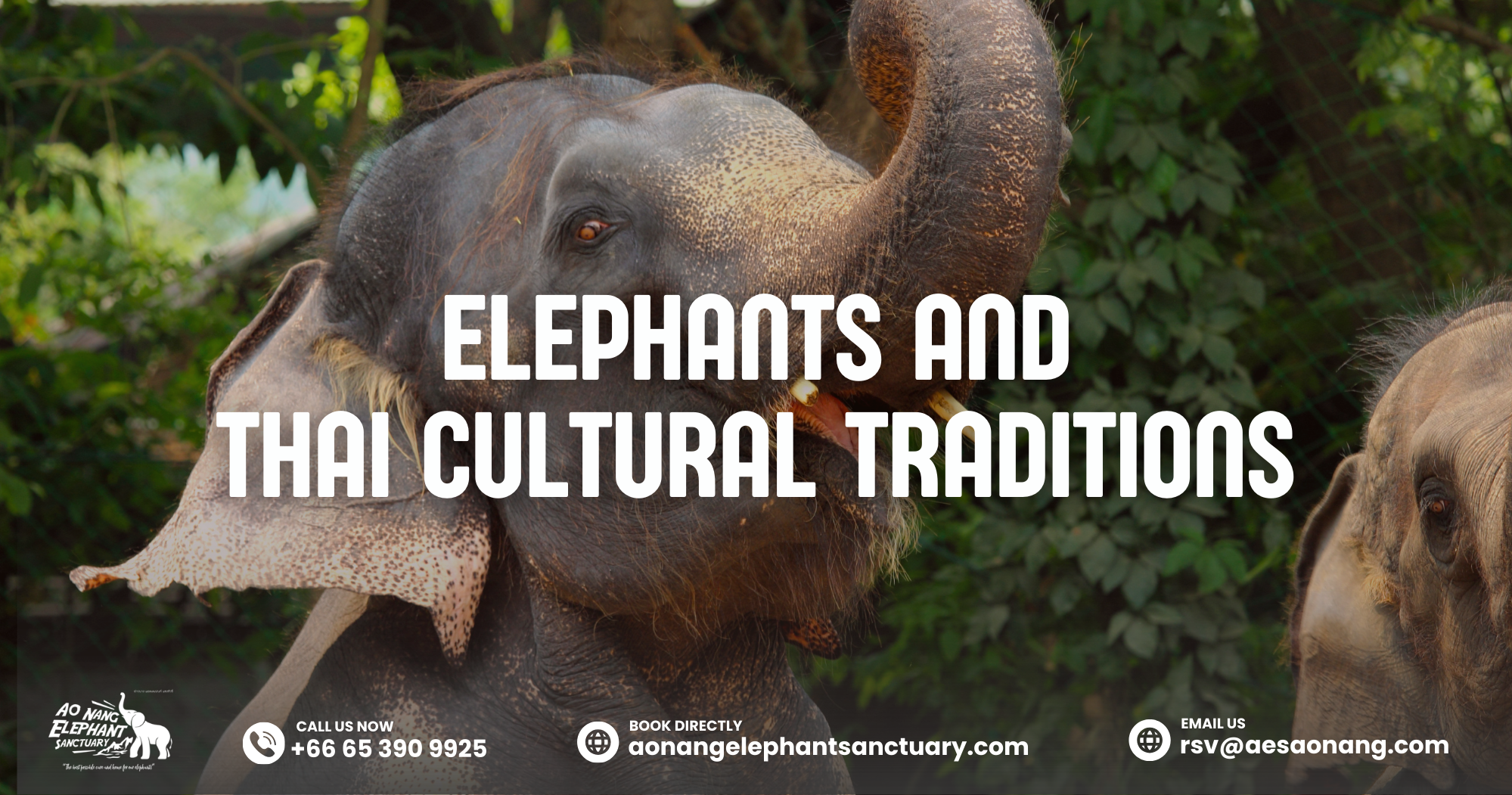
Many cultural traditions and festivals of Thailand revolve around elephants and their historical significance.
Elephant Festivals
A handful of regions in Thailand are holding elephant festivals that emphasize the bond between humans and elephants. Typically, such festivities involve elephant parades, cultural performances, and educational exhibits on elephant care and conservation.
Although in the past some festivals were centered on elephant entertainment shows, the present ones are more education and ethical treatment oriented.
Elephant Blessing Ceremonies
In many areas, the locals perform a special ritual to bless the elephants and express their love and respect for them, considering them one of the most significant contributors to Thai society. Such ceremonies involve offering, praying, and employing ritual symbols to grant the elephants and their human keepers protection and good health.
Elephant Conservation Activities
At present, most of the ancient traditional elephant-related activities have been changed into conservation projects. Both sanctuaries and wildlife organizations guard elephants and assist in the rehabilitation of those rescued from difficult situations. Additionally, they inform visitors about responsible travel practices.
Local Expressions And Idioms Involving Elephants
Elephants are used in local idioms as well. For example, the saying “seeing an elephant’s tail but not its body” is a metaphor for grasping only a part or an incomplete version of the entire scenario. This kind of usage of elephants in local idioms is a testimony to the great influence that elephants have had on the Thai language and culture. One can also hear casual uses of elephants in conversations as metaphors for strength, size, or importance.
The Modern Meaning Of Elephants In Thailand
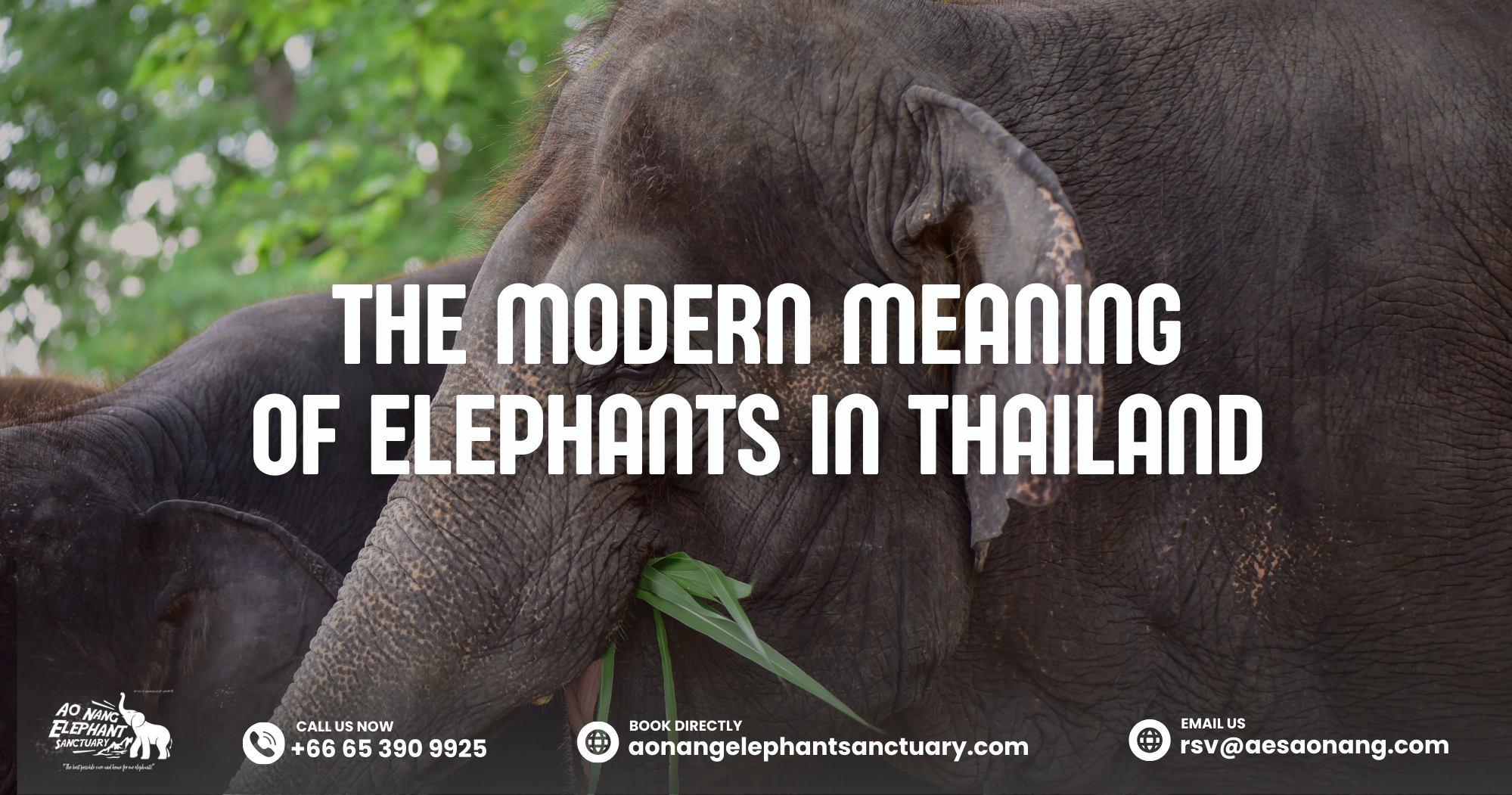
Now the meaning of elephant in Thai no longer remains tied only to the past and to symbolism. Apart from wildlife conservation and ethical tourism, elephants have come to symbolize the whole concept of these things.
Visitors who travel to Thailand as tourists are often eager to get a very meaningful elephant experience, which most of the time they find at sanctuaries where the well-being and natural behavior of elephants are the highest priorities.
In one way, such experiences spread the idea of elephant conservation, and at the same time, they keep the cultural connection between the Thai people and these marvelous creatures alive.
Reserve your spot now to get a chance to meet Asian elephants!
- Phone: +66 65 390 9925
- Email: [email protected]
- Book directly at aonangelephantsanctuary.com