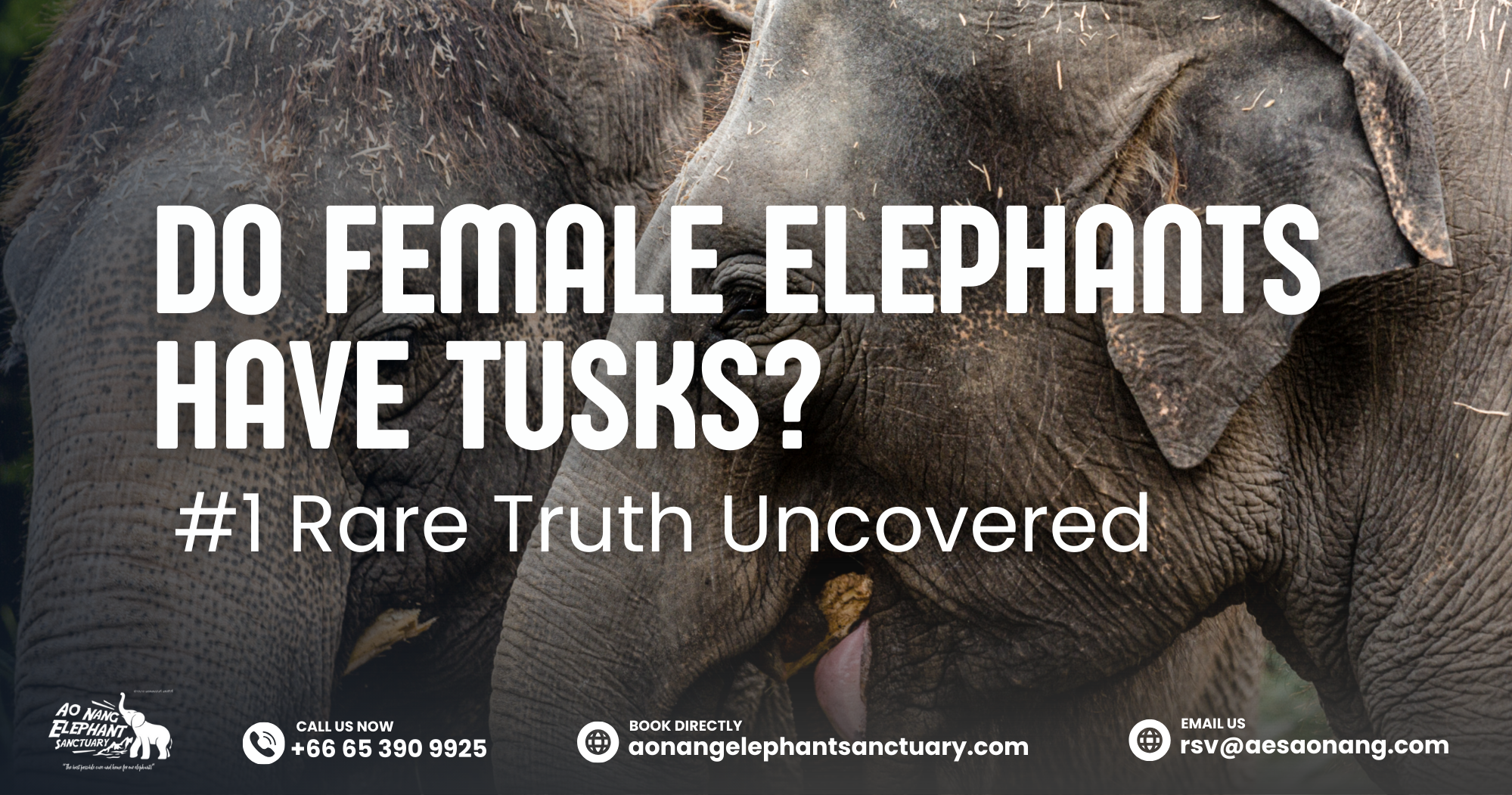
Do female elephants have tusks? Elephants have been the subject of numerous scientific studies and are the most researched of the terrestrial mammals. Despite this, many physical characteristics of elephants are still puzzling. For example, there is a lot of debate about tusks and whether or not female elephants possess them.
Tusks are usually seen as a symbol of size and dominance, but whether or not they are present depends on the species, genetics, and environmental factors. Knowing these differences between the species will allow visitors to gain a better understanding of what elephants are beyond just their appearance.
Caretakers of the Ao Nang Elephant Sanctuary suggest that visitors learn by observing instead of making assumptions. People got curious about the gender differences, behaviors, and physical characteristics of elephants after experiencing them up close. Tusks were involved in these questions, but the answer is more complex than what most people think.
Do Female Elephants Above The Ground Possess Tusks?
Female elephants sometimes may develop tusks, but otherwise not. In the population of African elephants that have been studied, it has been observed that both male and female elephants have a high likelihood of developing tusks. Nevertheless, Asian elephants that are home to Thailand have a completely different scenario when it comes to tusks and their appearance. The vast majority of female Asian elephants do not grow actual or visible tusks.
It is possible for female Asian elephants not to grow their tusks, but they are said to have very small teeth known as tushes. These teeth seldom go beyond the lips and remain unnoticed most of the time. Such a variation is the reason why a lot of people make the mistake of thinking that female elephants never have tusks. The misconception is the consequence of mainly seeing Asian elephants and not African ones.
Why Female Asian Elephants Rarely Develop Tusks
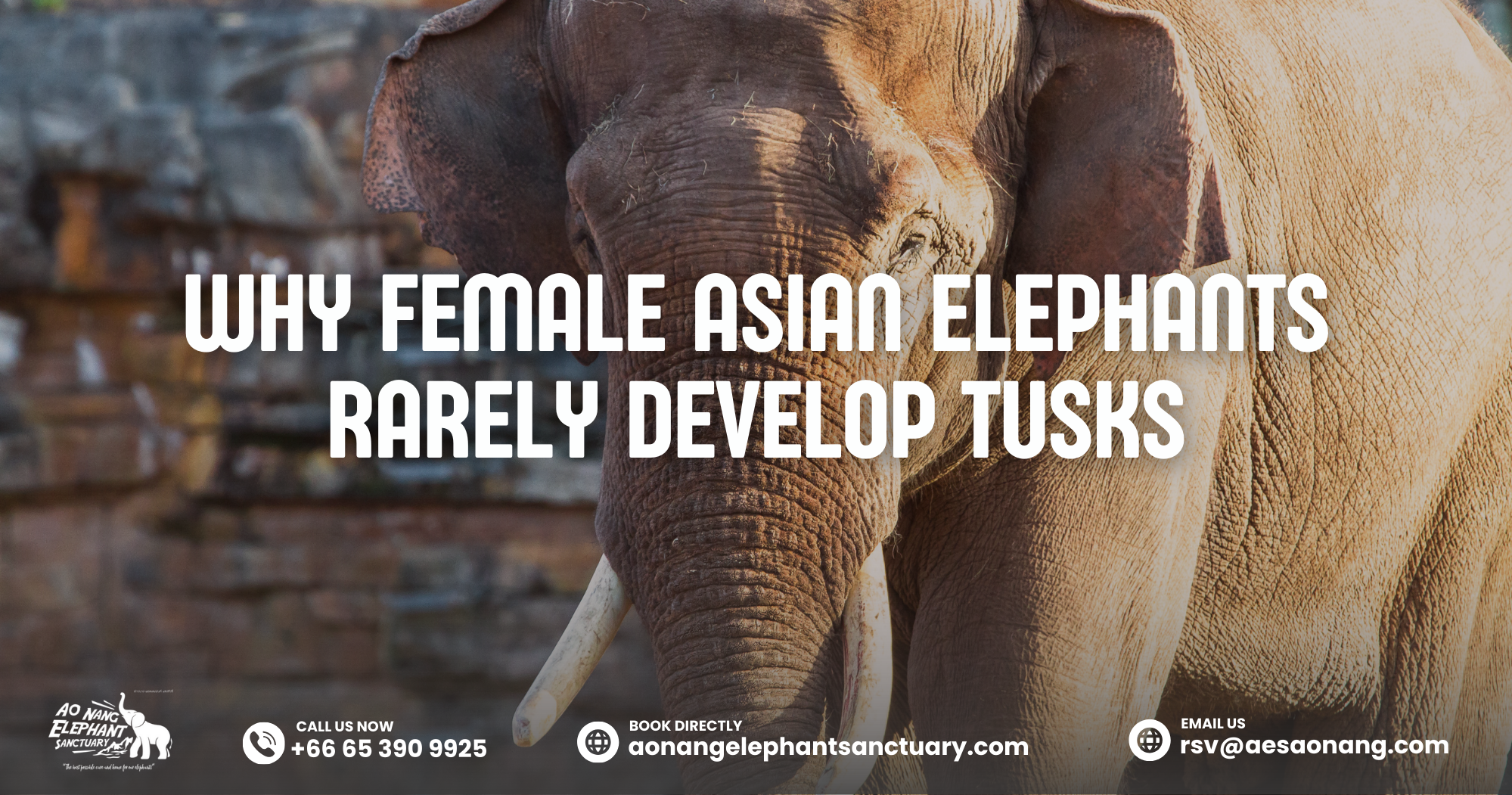
Tusks are a kind of tooth that comes from the incisors and has been changed to serve a different purpose. The specific gene responsible for the growth of tusks in male Asian elephants is believed to be only activated in these individuals by the genetic code. The researchers think that this condition came into being due to differential opportunities that arose in the course of evolution. What is more, females that did not have tusks could avoid being killed by poachers more easily and being injured less frequently.
The female elephants without tusks lived longer; hence, there was a gradual increase in the number of tuskless females among Asian elephants. The continuous exposure to humans and the conflict resulting from it further consolidated this trend. Elephants living closest to humans could be easily targeted if they had tusks, as human beings’ constant demand for ivory was the root of their danger.
Rescued female elephants without tusks are a common sight at ethical sanctuaries like Ao Nang Elephant Sanctuary. They are valued for their character, intellect, and social relationships rather than their physical attributes. The sanctuary’s approach of prioritizing welfare over appearance is in line with the current conservation standards.
How Male And Female Elephants Differ
Tusks represent just one of the differences between male and female elephants. Physically, males grow bigger, including stronger limbs, thicker necks, and heavier heads. Moreover, the number of temporal glands in males increases considerably during musth. These characteristics are especially helpful in identifying the male sex when there are no tusks.
On the other hand, females have their own distinctive social habits. They live in matriarchal groups where the leaders are the oldest and most experienced. These groups are highly cooperative and have been known to focus on calf rearing, as well as learning activities shared by all. Usually, males leave the group upon reaching sexual maturity and lead either solitary lives or join bachelor groups.
During sponsored tours at Ao Nang Elephant Sanctuary, the staff elaborates on the diversity of the species. Guests get a chance to see how female elephants communicate, defend their young, and, more importantly, maintain harmony within the group. These qualities, which reflect behaviors, frequently surpass the significance of tusks for the understanding of elephant society.
Is It Possible To Recognize An Elephant’s Gender If It Is Tusks-Less
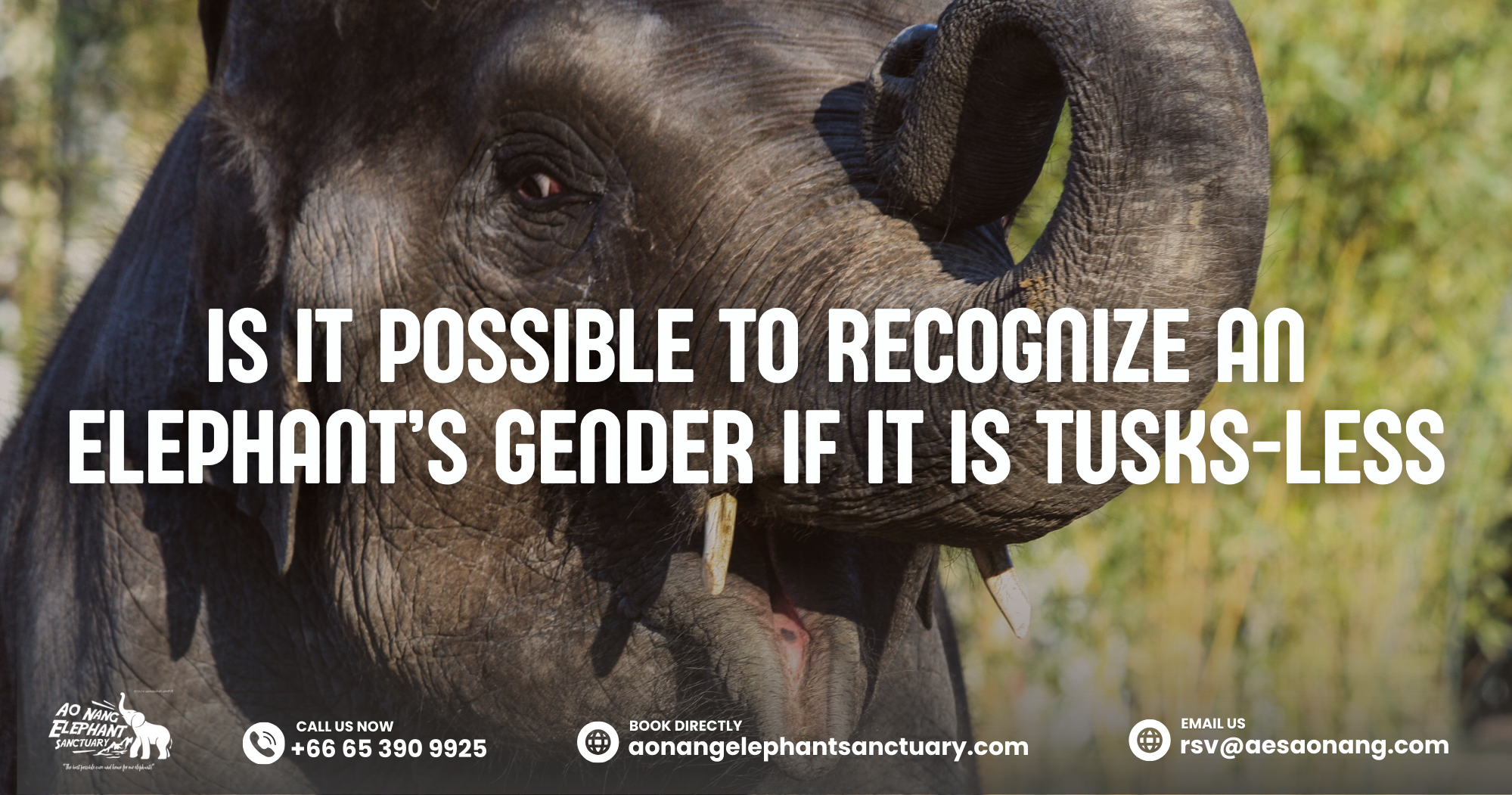
It is if you are observant enough. The figure of the body can reveal many things. The male’s physical features generally include broader parts of the head and trunk that are thicker. On the contrary, the female is characterized by a slimmer body and a rounded head. Care should be taken here, as such features can also be the result of an individual’s age and health.
Besides that, the behavior of the elephants could be another source of information. Basically, females are very caring and protective mothers who never see themselves far away from their calves. They take the lead initiative in their family groups. On the other hand, males are more likely to go for solo or less frequent appearances in the groups, characterized as assertive behavior, which is only mature males during the competition for the opposite sex.
In the sanctuary of Ao Nang Elephant, the visiting group is assisted by a guide through the process of unraveling the differences between males and females in a respectful way. There is no hurry in the classification of the species. A big part of the entertainment lies in getting to know them as unique individuals.
Are Tusks The Main Factor To Measure An Elephant’s Worth
In the past, tusks were a primary aid for elephants in getting food, protection, and digging. Even so, elephants have been able to adjust their lives in the absence of tusks. The female without tusks is therefore capable of utilizing her feet and trunk to accomplish these activities. The brainpower of an elephant compensates for the absence of certain body features.
One message from modern conservation is that tusks should not measure strengths or values. There are loads of tuskless elephants who live well, give birth to offspring, and even lead herds. What is more, it has been proven that the tuskless population’s rate of survival in the areas targeted by poachers is often higher.
The ethical standards of care in Ao Nang Elephant Sanctuary serve as an illustration of this. Here, the sanctuary does not give its promotion to the elephants based on their size or the presence of their tusks. Rather, the concentration is on such things as good health, freedom of movement, and emotional stability.
How Ethical Sanctuaries Shield Female Elephants
Female elephants are especially vulnerable to harsh treatment in captivity and are often exploited in the labor industry. Some of these females were taken away from their families at a very young age. Others continued to be subjected to a heavy workload without being given good care. Ethical sanctuaries provide them not only with rehabilitation but also with a permanent place of safety.
In Ao Nang Elephant Sanctuary, the female elephants are kept in natural environments, and they are not used for riding or exhibitions. They are free to create their own social circles and to live their lives as they see fit. The veterinary staff only monitors the health of the animals and does not resort to invasive techniques to control them.
A major part of the mission is to educate the public. People are made aware of the issues behind the missing tusks, the detrimental effects of riding, and the important role of observation. This method makes sure that respect becomes the norm, not entertainment, which is a win for the elephants and the visitors.
The Compassionate Side Of Elephants Without Tusks
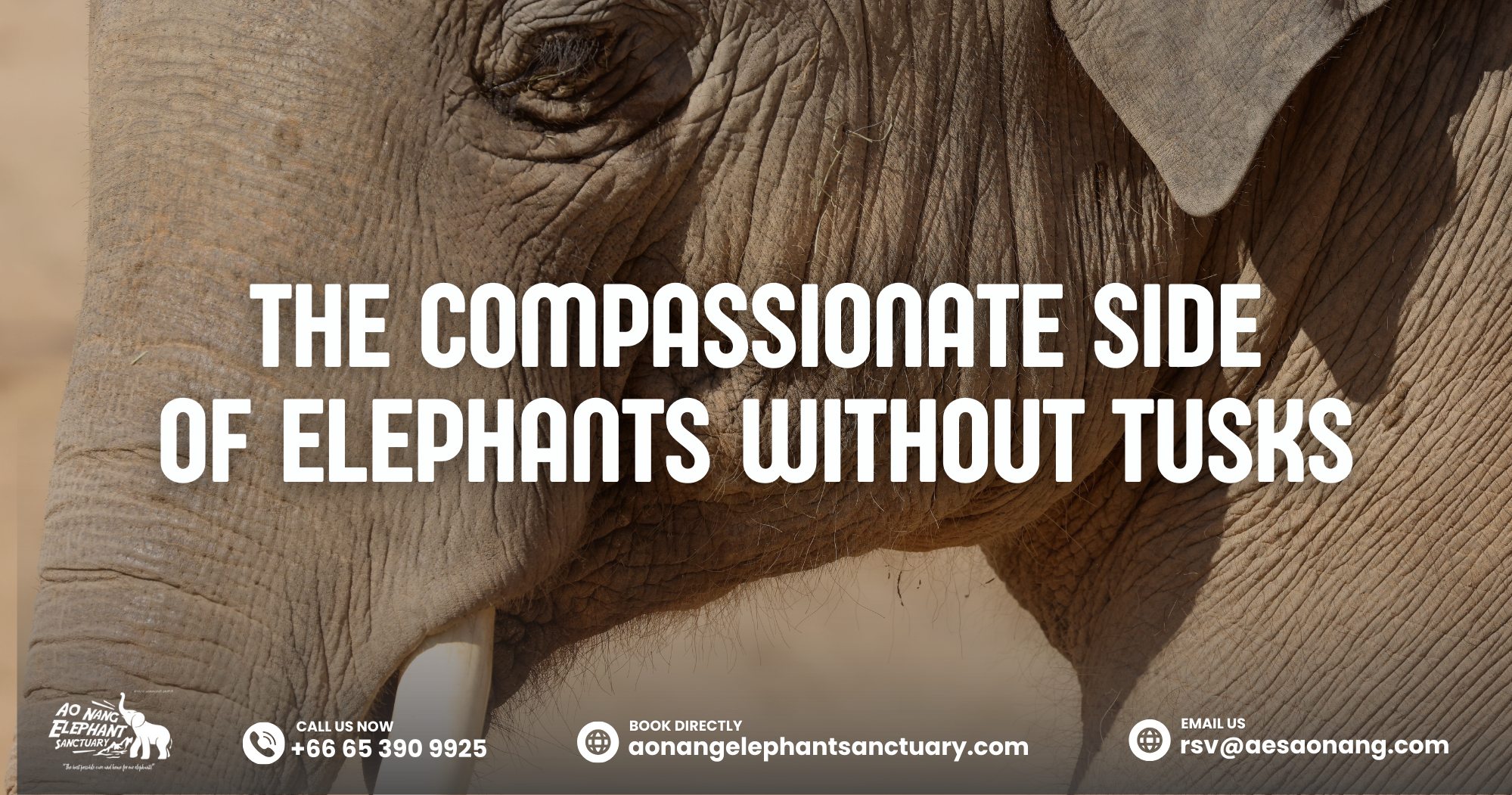
While female elephants do have tusks, the truth is that many times, especially in the case of Asian elephants in Thailand, they simply do not have one. Their lack of tusks is a consequence of nature, an adaptation for survival, and just biology rather than a sign of being weak. Accepting this reality will turn your respect for the elephants into that of highly intricate living organisms.
If you’re up for experiencing a genuine, ethical, and educational encounter with nature, make your way to Ao Nang Elephant Sanctuary. No pressure or stress is ever placed on elephants. Each visit becomes a contribution to providing care, education, and animal conservation that is based on altruism.
Go for experiences that put learning first and avoid those that are based on spectacle. Aid sanctuaries that treat the elephants as individuals with their own rights, not as performers.
Reserve your spot now to get a chance to meet Asian elephants!
- Phone: +66 65 390 9925
- Email: [email protected]
- Book directly at aonangelephantsanctuary.com